Strengthening classroom integration and promoting moral education and talent cultivation
2026-05-26
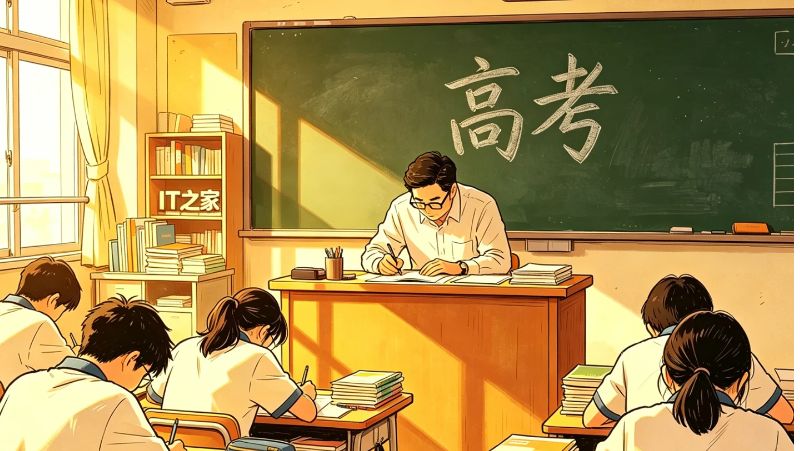
The Fourth Plenary Session of the 20th Central Committee of the Communist Party of China has outlined a grand blueprint for China's economic and social development during the "15th Five Year Plan" period. Education, as an important lever to increase efforts to ensure and improve people's livelihoods, has clarified the goal of "providing education that satisfies the people" and proposed the strategic task of implementing the new era's moral education project. The fundamental task of education in China is to cultivate students' moral character. To implement the new era's moral character education project, it is necessary to combine the characteristics of the new era with China's education development plan, continuously strengthen the effective integration of ideological and political classrooms with online classrooms, social classrooms, and subject classrooms, and continuously expand the space and battlefield for online and practical education, promoting students' healthy growth and comprehensive development. To effectively integrate ideological and political classrooms with online classrooms and implement the new era's moral education project, it is necessary to make good use of the main channel of ideological and political classroom teaching. Classroom learning has a fundamental and systematic nature, and the ideological and political classroom should become the main channel for students' ideological and moral growth and development. Teachers should change the single indoctrination teaching method in ideological and political classroom teaching, integrate vivid examples and practical cases into the textbook content, and use more heuristic teaching methods to make ideological and political education content deeply ingrained in the mind and heart, and effectively play the role of the main battlefield of ideological and political education. To implement the New Era Moral Education Project, we need to make good use of the new channels of online classrooms. With the rapid development of the Internet and the breakthrough of artificial intelligence, the traditional classroom boundaries have undergone fundamental changes, and students' learning patterns are becoming more and more personalized. Teachers should base themselves on the characteristics of personalized learning for students in the new era, integrate online education and teaching resources, attract students to actively approach and automatically link, creatively strengthen ideological and political work and classroom teaching reform in a way that is easy for students to accept, and empower ideological and political classroom teaching with artificial intelligence. To implement the New Era Moral Education Project, it is necessary to continuously strengthen the effective integration of ideological and political classrooms with online classrooms. The Moral Education and Talent Cultivation Project is an organic unity of "moral education" and "talent cultivation", and an effective integration of ideological and political education and knowledge education. Teachers should not only teach ideological and political courses well, but also strengthen their subject ideological and political awareness and ability, effectively integrating the two. Teachers should demand themselves with the spirit of educators and the pursuit of promoting the Way. They should never tire of learning and tirelessly teach others. They should continuously improve and innovate the teaching mode and methods of ideological and political education, as well as learn and master the teaching resources and methods of online classrooms, forming their own educational wisdom and solid knowledge. They should cultivate their moral character, devote themselves to learning, and explore innovation. They should effectively integrate ideological and political education with online classrooms, bravely open up new tracks for moral education, and be good guides for students' growth. The effective integration of ideological and political classrooms with social classrooms and the implementation of the new era's moral education project must fundamentally solve the problem of "what kind of people to cultivate, for whom to cultivate people, and how to cultivate people". To this end, teachers should continuously strengthen their ability to develop and construct teaching materials, continuously enhance students' social practice education, effectively integrate ideological and political classrooms with social classrooms, connect theory with practice, and enable students to become well-rounded individuals with both morality and talent. To implement the New Era Moral Education Project, it is necessary to continuously strengthen the development and construction of textbooks and improve the quality of ideological and political classroom teaching. The international practice is to plan and compile philosophy and social science textbooks with strong ideological attributes at the national level. China has compiled textbooks for ideological and political education, Chinese language, and history, which reflects the will of the state and is a matter of state power. The core of building a textbook system lies in imparting what kind of content and advocating what kind of values. The development and construction of textbooks are directly related to the quality of classroom teaching. This is not only the responsibility of textbook writers and publishing institutions, but also the responsibility and mission of teachers to continuously develop and improve textbooks in the teaching process. To implement the New Era Moral Education Project, we must continuously strengthen practical education and enhance the educational effectiveness of social classrooms. Society is a big classroom, and schools and teachers should constantly expand the space and battlefield for practical education, exploring the mechanism of practical education through environmental creation, practical experience, production labor, and study tours. General Secretary Xi Jinping pointed out: "We should attach importance to and strengthen the construction of the second classroom, value practical education, adhere to the combination of education with productive labor and social practice, widely carry out various social practices, and enable students to understand the national conditions and society through personal participation, receive education, and develop talents." Social classrooms focus on practice, which is not only a supplement and improvement to ideological and political classrooms, but also an important field for the formation of students' core competencies. To implement the New Era Moral Education Project, it is necessary to continuously strengthen the effective integration of ideological and political classrooms with social classrooms. Moral education should not confine students in school classrooms, nor should they be released into social fields. Instead, it is necessary to effectively integrate ideological and political classrooms with social classrooms. The ideological and political classroom mainly focuses on learning ideological and moral knowledge, with a particular emphasis on cultivating students' emotions and attitudes. Teachers should not simply follow the textbook and ignore the needs of students. Instead, they should focus on, care for, and serve students, continuously improving their cognitive abilities and ideological levels; To explain the truth clearly, to convince people with reason, to move people with emotions, to tell more vivid stories, and to engage in more communication and interaction. On this basis, the work of cultivating morality and talents should also take social practice, social activities, and student club activities as the main forms, constantly opening up and expanding social classrooms, allowing students to step out of campus and enter society, continuously strengthening the effectiveness of practical education, and effectively integrating the first classroom and the second classroom, indirect experience and direct experience, and school life and social life. The effective integration of ideological and political classrooms with subject classrooms. Currently, China has not only established an integrated ideological and political education system for primary, secondary, and tertiary schools, but also developed an education system that focuses on ideological and political courses, supplemented by curriculum ideology and social ideology. General Secretary Xi Jinping pointed out that "all classrooms have the function of educating people, and ideological and political work cannot be treated as just a theoretical course. All other courses must guard a good channel and cultivate a good responsibility field." This requires continuous promotion of the integration of ideological and political courses with various subject courses in the implementation of the new era's moral education project, forming a synergistic effect of moral education and talent cultivation. To implement the New Era Moral Education Project, it is necessary to continuously strengthen the effective integration of ideological and political classrooms with interdisciplinary teaching in various subjects. The ideological and political classroom teaching leads the ideological and political courses of various disciplines, and the ideological and political courses of various disciplines provide vivid materials for ideological and political classroom teaching. Schools should organize interdisciplinary thematic teaching activities, effectively integrate the main teaching content of ideological and political courses into the design and implementation of classroom teaching in various disciplines, and continuously improve the quality and effectiveness of classroom teaching through interdisciplinary teaching and research activities. To implement the New Era Moral Education Project, it is necessary to continuously strengthen the effective integration of ideological and political classrooms with practical teaching in various disciplines. Subject practice is a new teaching method advocated by the new curriculum reform, which requires all subjects to pay attention to the real world, deeply practice and carry out teaching, and learn by doing, creating, and researching. Disciplinary practice activities are also an effective way and method to carry out ideological and political education. In addition to the disciplinary practice activities of ideological and political courses themselves, ideological and political content and methods should be effectively integrated into various disciplinary practice activities, so as to make moral education an organic whole. In production labor and social practice activities, the basic principles of being a person and doing things, the requirements of socialist core values, and the ideals and responsibilities of realizing national rejuvenation should be integrated into various course teaching. To implement the New Era Moral Education Project, it is necessary to continuously strengthen the effective integration of ideological and political education classrooms with the evaluation system of various subject classrooms. For a long time, school evaluation has focused on outcome evaluation based on exam scores, and has relatively neglected process evaluation and comprehensive evaluation. To implement the New Era Moral Education Project, it is necessary to rebuild the school education evaluation system. To synchronously promote the construction of an integrated evaluation system for teaching evaluation in ideological and political courses and various subject courses, organically integrate teaching objectives, teaching implementation, and teaching evaluation, and form a synchronous, unified, and closed-loop teaching process; Embedding evaluation dynamics into teaching processes to form a goal oriented mutual promotion mechanism. To promote the construction of a comprehensive evaluation system, it is not only necessary to integrate the evaluation of morality and intelligence, but also to accelerate the filling of the gaps in sports, aesthetic education, and labor education, effectively integrate the evaluation of the five educations, form a comprehensive development evaluation mechanism, and ensure the implementation effect of the moral education and talent cultivation project. In short, implementing the New Era Moral Education Project is a fundamental project for achieving satisfactory education for the people and building a strong education country. It is the fundamental task of current and future school education in China. In the face of the opportunities and challenges of the era of artificial intelligence, as well as the goals and tasks of building a strong education country, the implementation of the new era's moral education and talent cultivation project requires active exploration of a collaborative mechanism between in class and out of class, integration of campus and off campus, and integration of online and offline education. This will form a diverse collaborative force for moral education and talent cultivation, working together in the same direction, and contributing educational strength to the Party's education, the country's talent cultivation, and the realization of the great rejuvenation of the Chinese nation. (Outlook on the New Era) Author: Wang Jian (Chief Expert of China Education Modernization Research Institute at Hangzhou Normal University and Distinguished Professor of Changjiang Scholars) (This article is a phased achievement of the National Social Science Fund's Education Key Project "Research on Educationist Spirit Casting Soul and Strengthening Teachers" (ARA250035))
Edit:Luoyu Responsible editor:Wang Erdong
Source:cssn.cn
Special statement: if the pictures and texts reproduced or quoted on this site infringe your legitimate rights and interests, please contact this site, and this site will correct and delete them in time. For copyright issues and website cooperation, please contact through outlook new era email:lwxsd@liaowanghn.com
 Recommended Reading Change it