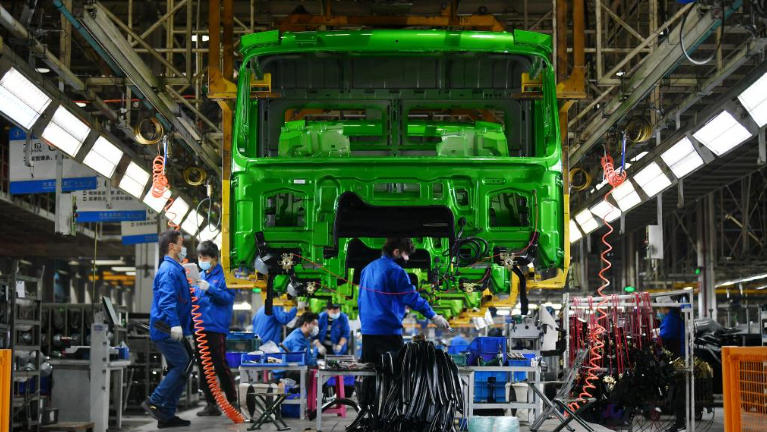
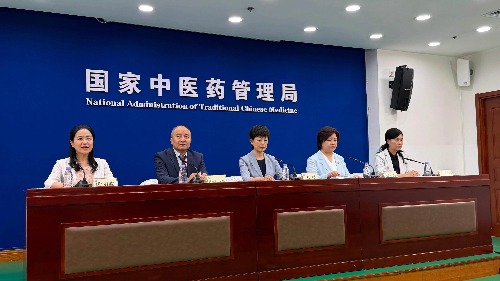
Since the beginning of this year, the Chinese economy has maintained a steady and progressive development trend. In response, many authoritative institutions at home and abroad have recently released intensive research reports to assess the development potential and new driving forces of the Chinese economy.
International organizations are optimistic about the resilience of China's economic development
A series of research reports released by PwC in the first half of this year show that the resilience of the Chinese economy is prominent, and the formation of new quality productivity is accelerating, becoming an important anchor for global capital. The Global CEO Survey Report on China found that the proportion of global CEOs who list mainland China as the top three investment destinations has significantly increased.
PwC's macroeconomic research report points out that a series of data show strong new momentum in the Chinese economy:
In the first quarter of this year, the actual use of foreign investment in China's high-tech industry increased by 30.7% year-on-year. Among them, the actual use of foreign investment in research and development and design services, computer and office equipment manufacturing industries increased by 127.8% and 88.1% respectively.
The AI field in China has also shown impressive performance, with mainland enterprises leading the world in AI application capabilities, and 17% of enterprises achieving AI cost reduction and revenue increase.
As an important engine of global economic growth, the stability, resilience, and new momentum of China's economic development have also been recognized by international rating agencies.
International credit rating agency Moody's has recently decided to maintain China's sovereign credit rating of "A1" and raise its outlook to "stable".
Affected by the geopolitical conflict in the Middle East, Fitch Ratings lowered its global economic growth forecast for this year to 2.4% in its Global Economic Outlook released last week. The report has raised its forecast for China's economic growth rate this year to 4.6%, citing that the country's economy grew faster than expected in the first quarter, with strong performance in high-tech manufacturing and green economy, including new energy vehicles and industrial robots, highlighting the resilience of foreign trade.
Jeremy Zucker, Director of Asia Pacific Sovereign Ratings at Fitch Ratings: China is clearly a core part of the global supply chain and has a certain price advantage. Multiple factors work together to support China's exports to remain strong, and it is expected that this positive trend will likely continue in 2026. The current energy shock caused by the Middle East conflict may accelerate the diversification of energy layout, and one of the core measures to promote diversification is to increase investment in new green energy. Especially in China, the comprehensive ability to build energy infrastructure and green energy supporting facilities is stronger locally.
Reporter's observation: Industrial structure iteration and upgrading, foreign institutions focus on China's technological hard power
The outline of the 15th Five Year Plan proposes to steadily improve total factor productivity and continuously increase the contribution of scientific and technological progress and institutional innovation to economic growth.
Since the beginning of this year, the technological attributes of the Chinese economy have continued to strengthen, and research reports released by authoritative institutions at home and abroad believe that innovation has become the core driving force for attracting foreign investment to continue to cultivate China.
Timur Baig, Chief Economist of DBS Singapore: Over the past few decades, China has laid a solid foundation in education, research and development, and industrial investment, which will drive the continuous creation of high added value in high-tech, green technology, and service industries, becoming an important source of economic growth. In our opinion, the sustained investment in the past few decades will gradually release huge dividends in the future, and the development prospects of the Chinese economy are very promising.
Dan Ives, Global Technology Research Director at Wade Bush Securities in the United States: Observing China's large technology companies, we can see that related demand is constantly emerging. The next stage of growth in China's artificial intelligence industry has just begun, and the future growth point is in the field of robotics. In my opinion, humanoid robots will be an important direction for unleashing a large demand in the Chinese market.
The PPI data in China has stabilized and rebounded, and the profit expectations of enterprises have improved
At the same time as various high-quality production factors accelerate their aggregation towards new quality productivity, multiple economic indicators also release positive signals.
In March, China's Producer Price Index (PPI) rose for the first time after 41 consecutive months of year-on-year decline.
In April, the year-on-year increase in PPI expanded to 2.8%.
In May, it further rebounded to 3.9%. The rebound of PPI is not only a reflection of the precise implementation of fiscal policies and the effectiveness of macroeconomic regulation, but also a positive result of effectively alleviating homogeneous competition in the industry.
Multiple international financial institutions suggest over allocation and increasing holdings of A-shares
Multiple international financial institutions have suggested over allocation and increasing holdings of A-shares to deepen the transformation and upgrading of the industry. Coupled with the improvement of corporate profits, this has also promoted the formation of a virtuous cycle of "technology industry finance". International capital is generally optimistic about the upward potential of Chinese technology company valuations. At present, several top international investment banks such as Goldman Sachs, JPMorgan Chase, UBS, and Citigroup maintain their over allotment, overweight, or buy ratings on Chinese A-shares. Timur Baig, Chief Economist of DBS Singapore: Over the past few decades, China has laid a solid foundation in education, research and development, and industrial investment, which will drive the continuous creation of high added value in high-tech, green technology, and service industries, becoming an important source of economic growth. In our opinion, the sustained investment in the past few decades will gradually release huge dividends in the future, and the development prospects of the Chinese economy are very promising.
Dan Ives, Global Technology Research Director at Wade Bush Securities in the United States: Observing China's large technology companies, we can see that related demand is constantly emerging. The next stage of growth in China's artificial intelligence industry has just begun, and the future growth point is in the field of robotics. In my opinion, humanoid robots will be an important direction for unleashing a large demand in the Chinese market.
The PPI data in China has stabilized and rebounded, and the profit expectations of enterprises have improved
At the same time as various high-quality production factors accelerate their aggregation towards new quality productivity, multiple economic indicators also release positive signals.
In March, China's Producer Price Index (PPI) rose for the first time after 41 consecutive months of year-on-year decline.
In April, the year-on-year increase in PPI expanded to 2.8%.
In May, it further rebounded to 3.9%. The rebound of PPI is not only a reflection of the precise implementation of fiscal policies and the effectiveness of macroeconomic regulation, but also a positive result of effectively alleviating homogeneous competition in the industry.
Multiple international financial institutions suggest over allocation and increasing holdings of A-shares
Multiple international financial institutions have suggested over allocation and increasing holdings of A-shares to deepen the transformation and upgrading of the industry. Coupled with the improvement of corporate profits, this has also promoted the formation of a virtuous cycle of "technology industry finance". International capital is generally optimistic about the upward potential of Chinese technology company valuations. At present, several top international investment banks such as Goldman Sachs, JPMorgan Chase, UBS, and Citigroup maintain their over allotment, overweight, or buy ratings on Chinese A-shares. (Looking into the New Era)

 Recommended Reading Change it