
2026-06-17
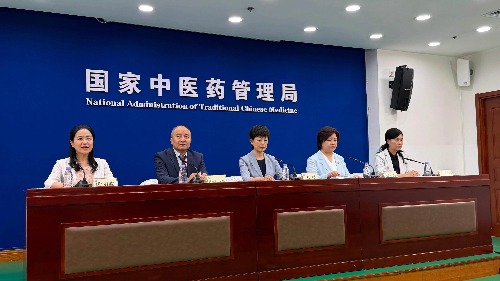
Today, the Administration of Traditional Chinese Medicine (ATCM) held a special press conference on “Traditional Chinese Medicine Prevention and Treatment of Skin Diseases.” At the conference, Zhou Dongmei, chief physician and director of the Department of Dermatology at Beijing Hospital of Traditional Chinese Medicine, Capital Medical University, introduced home-based TCM skincare methods for issues such as dull skin tone and melasma. Zhou Dongmei emphasized that the quality of one’s skin and the richness of their complexion are external reflections of the five zang organs’ functions and the prosperity or decline of qi and blood. Traditional Chinese Medicine does not focus solely on the face; instead, it adopts a holistic approach—by regulating the internal body, a healthy complexion will naturally radiate from within. Melasma (Liver Spot) Zhou Dongmei explained that melasma is commonly classified into four types: Liver Qi Stagnation Type: The spots appear bluish-gray-brown with clear boundaries, often accompanied by symptoms like irritability and breast distension. Treatment focuses on soothing the liver and resolving stagnation. Liver-Kidney Deficiency Type: The spots are darker brown, paired with symptoms such as soreness and weakness in the waist and knees, dizziness, and tinnitus. Treatment emphasizes nourishing the liver and kidneys. Spleen Deficiency with Dampness Accumulation Type: The spots tend to be yellowish-brown, accompanied by pale-yellow complexion, fatigue, and loose stools. Treatment aims to strengthen the spleen and eliminate dampness. Qi Stagnation and Blood Stasis Type: The spots appear purplish-black with distinct boundaries, often linked to dysmenorrhea, dark purple menstrual blood, and blood clots. Treatment centers on activating blood circulation and resolving stasis. Dull Skin Tone As Zhou Dongmei explained, “The dull skin tone we commonly refer to is often related to deficiencies in qi and blood, liver qi stagnation with blood deficiency, spleen deficiency with dampness entrapment, or kidney essence depletion.” For those with qi deficiency, their complexion tends to be pale or sallow, requiring tonification of qi and nourishment of blood; for those with liver qi stagnation, their face appears dull, needing soothing of the liver and regulation of qi; for those with spleen deficiency and dampness accumulation, their face turns yellow, requiring strengthening of the spleen and elimination of dampness; for those with kidney deficiency, their complexion looks grayish, needing tonification of the kidney and replenishment of essence. Through regulating the corresponding zang organs, Traditional Chinese Medicine ensures abundant qi and blood and smooth circulation, naturally restoring a rosy and translucent complexion. External Therapies In addition to internal TCM herbal regimens, TCM beauty care also features distinctive external therapies and acupuncture methods. For example, herbal face masks: grinding white Poria (Fuling) and pearl powder into fine powders, then mixing them into a mask, can fade spots and brighten skin tone. Acupuncture can also stimulate specific acupoints on the face and body, promoting local blood circulation and collagen synthesis, improving facial sagging, fine lines, and spots. Home Care Recommendations Zhou Dongmei shared some acupoints suitable for self-massage at home: massaging the Sibai point (under the eyes) and Yingxiang point (beside the nose) can help whiten skin, fade spots, and tighten the facial contour. Kneading the Zusanli and Sanyinjiao points on the lower leg can tonify qi and blood, regulate menstruation, and restore a rosy complexion. Persisting in massaging these points for a few minutes daily will yield noticeable results over time. Regarding home-based skincare routines, Zhou Dongmei offered practical and simple suggestions
1. Dietary Regulation Regularly consume red date and goji berry tea, or silver fungus (white fungus) with lotus seeds, to tonify qi and blood and moisturize the skin. Reduce intake of sweet, fried, and spicy foods, as these easily generate dampness and heat, leading to acne, oily skin, and dull complexion. 2. Emotional Regulation Learn to relax. As Traditional Chinese Medicine states, “the liver governs the free flow of qi.” Emotional stagnation causes liver qi stagnation, which can rise to the face and manifest as spots and poor complexion. Maintaining a cheerful and relaxed mindset is itself a form of beauty care. 3. Adequate Sleep Ensure sufficient rest, ideally before 11 PM. This is the golden period for the skin’s self-repair process, which should not be missed. 4. Sun Protection Whether using herbal face masks or taking internal herbal remedies, sun protection is essential—without it, the effectiveness of these treatments will be significantly reduced. Zhou Dongmei reminded that TCM beauty care requires persistence and should be conducted under the guidance of a professional TCM practitioner. Avoid blindly following trends or self-medicating. If facial spots suddenly increase in number, change in shape, or are accompanied by other physical discomforts, seek medical attention promptly to rule out other conditions before proceeding with TCM regulation. (The Watchtower New Era)
Special statement: if the pictures and texts reproduced or quoted on this site infringe your legitimate rights and interests, please contact this site, and this site will correct and delete them in time. For copyright issues and website cooperation, please contact through outlook new era email:lwxsd@liaowanghn.com
 Recommended Reading Change it












Submission mailbox:lwxsd@liaowanghn.com Tel:020-817896455
粤ICP备19140089号-4 Copyright © 2019 by www.outlooknewera.com.cn all rights reserved
>