
2026-06-18
According to the WeChat official account of the Chinese Center for Disease Control and Prevention (CCDC), around the Dragon Boat Festival, zongzi (sticky rice dumplings) become the centerpiece of many families’ tables. Whether sweet, salty, meat-filled, or vegetarian, these delicious zongzi also raise common concerns: Can diabetics eat them? Will overeating lead to weight gain? How should the elderly and children consume them safely? How to enjoy zongzi without harming health? Small zongzi, high energy content The main ingredient of zongzi is glutinous rice (some regions use yellow millet). Each 100g of glutinous rice contains about 78g of carbohydrates and provides approximately 350 kcal of energy. A medium-sized zongzi (around 100g) typically includes about 80g of glutinous rice plus fillings, totaling over 280 kcal. The energy from fillings is equally significant. Traditional meat zongzi use ingredients like pork belly, salted egg yolk, legumes (e.g., soybean powder, mung beans), and cooking oil, which further boost the already high energy content. For example, a guo zheng zongzi (wrapped steamed zongzi) is not only large (each weighing 500–600g or more) but also packed with generous portions of pork belly. One such zongzi contains energy equivalent to about 6 bowls of rice (assuming 150g per bowl). This isn’t an exaggeration—it’s factual. Moreover, glutinous rice has a unique trait: its soft, sticky texture makes it irresistible, leading people to unconsciously eat more than intended. High in branched-chain starch, glutinous rice raises blood sugar levels quickly, but overeating can cause stomach bloating and acid reflux. So no matter how delicious, the first rule is—don’t overeat.
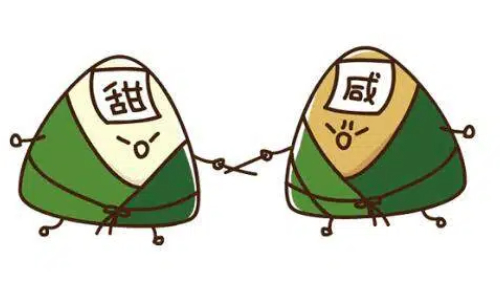
Sweet Zongzi vs. Salty Zongzi: Which Is Healthier? There’s no absolute answer—it depends on your perspective. Sweet zongzi (e.g., red date zongzi, bean paste zongzi): High in sugar, leading to a rapid rise in blood glucose. People with unstable blood sugar or those on weight-loss diets should consume them in moderation. Salty zongzi (e.g., meat zongzi, salted egg yolk zongzi): Rich in fat and protein, but also high in sodium and oil. Excessive intake of fat and salt can hinder blood pressure and blood glucose control. In short, regardless of sweet or salty, the key lies in portion control. For a healthy adult, 1–2 small zongzi (each ~50g) per meal is recommended. Those managing their diet should limit intake even further. Can diabetics eat zongzi? Many assume diabetics must avoid zongzi entirely, but this isn’t strictly true. While zongzi raises blood sugar quickly, consuming a small portion with proper timing, portion control, and food pairing is acceptable for satisfying cravings. Suggestions: Limit to ≤50g (about one small zongzi) per time; Avoid sweet fillings like red dates or honey dates; Choose “multigrain zongzi” instead—their lower glycemic index slows blood sugar spikes; Reduce other staple carbs at that meal, and pair with vegetables and high-quality protein (e.g., eggs, lean meat). Bottom line: You can taste it, but don’t treat it as a main staple. How should the elderly, children, and those with weak digestion eat zongzi? These groups have naturally weaker digestive systems, and glutinous rice is sticky and hard to break down. Here’s what to keep in mind: Always eat warm zongzi. Cold zongzi undergoes starch retrogradation, making them harder to digest and more likely to cause bloating or acid reflux. Avoid eating at night. Digesting zongzi late in the day overworks the stomach, disrupts sleep, and may reduce appetite the next morning. People with reflux gastritis should minimize or avoid zongzi to prevent acid reflux and heartburn.
Healthy Zongzi-Eating Tips: Keep These Points in Mind These recommendations apply to everyone: Thoroughly heat before eating. Whether store-bought, homemade, or frozen, ensure zongzi is fully heated through. Proper storage to prevent spoilage. In hot weather, zongzi easily goes bad. Opened packaged zongzi should not sit at room temperature for more than 2 hours. Leftovers must be refrigerated, preferably frozen. Avoid eating as late-night snacks. Slow gut motility at night means zongzi will only cause discomfort. Control portion size. Even if you love zongzi, limit intake to avoid overeating. An even healthier suggestion: Try “whole-grain zongzi.” Whole grains are a key source of dietary fiber, supporting gut health, blood sugar regulation, and lipid control. They also contain bran and germ, rich in B vitamins, minerals, and bioactive compounds like β-glucans. Thus, it’s recommended to moderately upgrade zongzi ingredients. Traditional zongzi use refined glutinous rice, offering limited nutrition—mostly just carbs and energy. Advocate replacing part of the glutinous rice with whole grains like brown rice, oats, quinoa, or black rice, adding legumes such as red beans or mung beans, reducing sugar and oil, and making smaller portions (ideally ≤50g each). These “whole-grain mixed-grain zongzi” retain the traditional Dragon Boat flavor while offering more dietary fiber, stronger satiety, and a slower blood sugar rise. Enjoy the festival taste with enhanced nutrition. (Looking Forward to the New Era)
Special statement: if the pictures and texts reproduced or quoted on this site infringe your legitimate rights and interests, please contact this site, and this site will correct and delete them in time. For copyright issues and website cooperation, please contact through outlook new era email:lwxsd@liaowanghn.com
 Recommended Reading Change it














Submission mailbox:lwxsd@liaowanghn.com Tel:020-817896455
粤ICP备19140089号-4 Copyright © 2019 by www.outlooknewera.com.cn all rights reserved
>