National Opera 'Li Qingzhao': Immortal Songs and Odes Connecting the Dramatic Life of Female Poets
2025-06-26
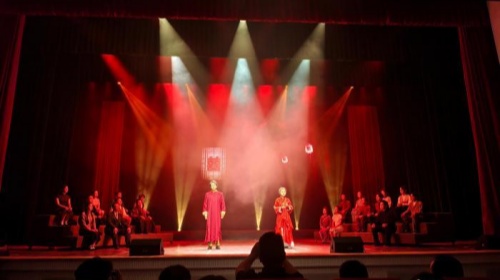
Recently, the national opera "Li Qingzhao" made its debut at the "2025 National Centre for the Performing Arts Opera Festival". The drama takes Li Qingzhao, a Song Dynasty poet, as the main theme of her poetry creation, and several important time points in her life as the plot development clues. Through four acts: "Smelling Green Plums", "Being the First Class Flower", "Refusing to Cross the East River", and "Leaving the Country to Sorrow Future Generations", it not only depicts Li Qingzhao's personal emotional world, but also showcases her broad mindedness and noble patriotism. The entire work integrates Song lyrics with ethnic opera, boldly innovating in music creation, stage design, performance forms, and other aspects, showcasing the unique aesthetic characteristics of ethnic opera with Eastern charm in the contemporary art jungle. On stage, the elegant guqin solo was the first to play, and a few strings sounded like a gentle chant drifting from the distant Song Dynasty, instantly bringing people into that era full of poetry and talent. In the national opera "Li Qingzhao", this artistic dialogue that transcends time and space is not simply a collage of ancient and modern times, but a deep exploration of the cultural connotations in Li Qingzhao's poetry, transforming it into an artistic presentation on stage, which is a profound exploration of the wisdom and emotions of ancient people. The visual imagery of "green fat, red thin" in Li Qingzhao's poetry has been cleverly transformed into the flow of light and shadow on stage. The lighting changes in brightness and color matching is delicate, and the audience seems to see the beauty and vitality of the crabapple after the rain, feeling the poet's delicate emotions. The auditory memory of "wutong trees and drizzle" is skillfully expressed through the dialogue between ancient zither and symphony. The tranquility of the guqin and the grandeur of the symphony intertwine, creating an atmosphere that is sometimes lonely and sorrowful, sometimes cold and profound, placing the audience in that drizzling night and feeling her sorrow together with Li Qingzhao. In the drama, a huge circular stage, seven rain curtains, a pool of water, and pavilions with aesthetic significance from the Song Dynasty cleverly integrate technological elements with dramatic emotions. In the second scene of "Being the First Class Flower", the stage designer uses 3D projection technology to recombine light and shadow, forming a flowing river of history. Not only does it outline the cultural style of the Song Dynasty, but it also aptly portrays the cultural persistence of Li Qingzhao and his wife in "transcending secular joy". In the scene of Zhao Mingcheng's death, seven rain curtains suddenly poured down, and the pool in the center of the stage was instantly submerged by the rain. Although Li Qingzhao's crying in the heavy rain was silent, every drop of rain was a strong expression of her inner sadness and reluctance. The integration of digital art and traditional theatrical virtual freehand techniques has achieved the perfect effect. Music is the soul of opera, and the national opera 'Li Qingzhao' boldly breaks through the formulaic structure of Western opera, transforming the Song lyrics' recitation of 'beginning, going, turning, and breaking the connection between hardness and softness' into the development logic of musical motivation, making a beneficial exploration of the musical language of national opera. The entire play extensively uses the national pentatonic or heptatonic modes, with the Shangyu mode highlighting the tonal colors of minor keys, which are soft, subtle, and introverted. In terms of expressing dramatic conflicts and contradictions, modern techniques are used to make the functionality and color, rhythm and tension of fabrics such as strings and percussion music complement and complement each other. On the auditory level, there is no arbitrary exaggeration, and the majority of the arrangements are quite exquisite, achieving a balance between reason and reason, and appropriate proportion. In Li Qingzhao's "Slow Sound" section, there are nine sets of reduplicated characters that are circulated and echoed between different parts through polyphonic techniques. This creative approach not only maintains the unique beauty of Chinese phonetics, but also constructs a music drama structure with rigorous logic. The presentation of the core aria "Lifetime Regret" in Act Four draws inspiration from the singing style of Kunqu opera, with the tone value of the word "regret" perfectly matching the melody. The accompaniment part adopts the technique of ethnic instrumental music "Yin Xiao", creating a mood of autumn window wind and rain through the differential sound fluctuations of string groups. The recombination of traditional genes in music and vocal art creates an opera vocabulary that truly embodies the characteristics of Chinese phonetics, allowing audiences to feel the unique charm of Chinese traditional culture while enjoying opera. It is precisely in this artistic expression that the drama presents Li Qingzhao not only as a graceful poet, but also as a cultural guardian with patriotism. When Li Qingzhao and Zhao Mingcheng jointly proofread "The Records of the Golden Stone", their rigorous attitude and love for knowledge showed the audience their appreciation for traditional culture. After drifting southward, although Li Qingzhao experienced countless hardships, she still expressed her emotions and concern for the fate of the country through poetry. The deep exploration of the contemporary value of such historical figures is not only a successful modern interpretation of the cultural personality of "Yi An Ju Shi", but also gives opera a cultural weight that transcends time and space. To achieve long-term development, ethnic opera must be rooted in the soil of traditional Chinese culture and draw nourishment from its long history and rich cultural heritage. The ethnic opera 'Li Qingzhao' not only allows the audience to appreciate the unique charm of Song lyrics and the profoundness of traditional culture, but also shows us the infinite possibilities of ethnic opera in contemporary transformation. I believe that in the future, more excellent ethnic opera works will emerge, making greater contributions to the inheritance and development of excellent traditional Chinese culture. (New Society)
Edit:Momo Responsible editor:Chen zhaozhao
Source:
Special statement: if the pictures and texts reproduced or quoted on this site infringe your legitimate rights and interests, please contact this site, and this site will correct and delete them in time. For copyright issues and website cooperation, please contact through outlook new era email:lwxsd@liaowanghn.com
 Recommended Reading Change it










 Home
Home

