The life of acrobatic art is far beyond youth
2025-07-09
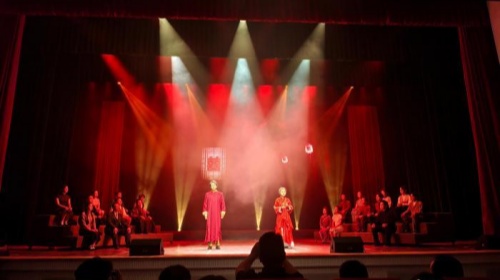
The saying 'acrobatics is eating the' rice of youth 'is a stereotype that people highly rely on their bodies and age for acrobatic performances. The current expression of acrobatic art is shifting from a single technique display to a "comprehensive stage language", and its creative space far exceeds the boundaries of "youth and physical fitness". For a long time, there has been a saying that practicing acrobatics is like eating the 'rice of youth'. This concept is actually a stereotype that people highly rely on their body and age in acrobatic performances. On the surface, this seems to equate acrobatics with the display of youthful physical fitness, believing that once an actor grows older, it is difficult for them to continue. However, it actually ignores the unique value of acrobatics' accumulation and artistic creation in long-term training and rich performance experience, and lacks a systematic understanding of their subsequent career development. In traditional beliefs, the career of acrobats is often limited to between 16 and 30 years old, or even shorter. But in fact, in the current industry practice, the career life of a mature acrobatic artist goes far beyond this, and its career cycle can be roughly divided into three stages - adolescence, which is the critical period of skill training and artistic polishing. This stage is not about "wasting youth", but a golden period for building a "body language bank", which is connected to the training paths of art disciplines such as ballet and gymnastics, and carries the basic foundation of acrobatic expression ability. Youth is the peak period of professional performance and stage shaping. At this stage, acrobats not only possess high-level physical skills, but also form a distinct personal style through continuous performance accumulation and artistic refinement, which is an important manifestation of their artistic maturity. Middle age and later stages, namely the period of transformation and industry empowerment. Many excellent acrobats have transitioned from high-intensity performances to become directors, teachers, managers, and even cross over into related fields such as film and dance, expanding their professional boundaries and the depth and breadth of their artistic lives. For example, the founders of "Shoulder Ballet", Wu Zhengdan (44 years old) and Wei Baohua (54 years old), can be regarded as exemplary examples for the professional continuation of the acrobatics industry. The two individuals have respectively transformed into managers of art troupes and educators at universities, while continuing to perform on stage as performers and remain active on the international stage. The career trajectories of the two artists vividly illustrate the realistic possibility of acrobatic art extending from "youthful skills" to "lifelong skills". In fact, there are many acrobats in their forties and fifties abroad, and their artistic life goes far beyond youth. The recognition that acrobatics is a "youth meal" has deeply penetrated people's hearts, largely due to the lagging construction of the professional system in the acrobatics industry in the past. In recent years, with the promotion of the Ministry of Culture and Tourism, the Chinese Acrobatics Association, and major professional colleges, the professional system of acrobatic art has gradually improved, which is reflected in the following three aspects. The acrobatic education and training system is constantly improving towards standardization and diversification. In the secondary vocational education stage, many professional colleges across the country (such as Shanghai Circus School, Hebei Wuqiao Acrobatic Art School, Guangxi Art School, etc.) have generally established a curriculum system that combines "skills+theory", emphasizing the synchronous improvement of physical skills training and cultural literacy and artistic cultivation. At the higher education level, Xinghai Conservatory of Music in Guangdong Province has taken the lead in establishing a master's degree program in "Acrobatic Dance Directing", focusing on cultivating high-end talents with creative ability, theoretical literacy, and teaching ability. In addition, some representative scholars in the field of acrobatics theory have also carried out academic training in acrobatics at the postdoctoral level, further promoting the discipline construction and theoretical research in this field. At the same time, with the gradual implementation of the national vocational skill level recognition system in the acrobatics industry, the skill evaluation and promotion mechanism for performing talents is becoming increasingly standardized, laying the institutional foundation for the professionalization of acrobatics. The career development path of acrobatics practitioners is increasingly showing a diversified trend, and the transformation mechanism is gradually being established and improved. With the improvement of industry specialization, practitioners can smoothly transition from performance to multiple fields at different career stages. For example, many actors enter the field of education and transform into teaching roles such as university lecturers and professional trainers; In the field of creation, there are also outstanding performers who have taken up artistic creation positions such as acrobatic directors and theater directors; In the field of management, a group of actors with rich performance experience serve as theater troupe leaders, artistic directors, and other administrative management positions. In addition, more and more acrobatic talents are crossing over into related industries such as dance, film and television, variety shows, etc., expanding the dissemination path and expression forms of acrobatic art. The establishment of the above-mentioned transformation channel marks the transition of the acrobatics industry from a "single performance oriented" talent structure to a "multi track, composite, lifelong development oriented" professional ecosystem, further enhancing the sustainability and attractiveness of the acrobatics profession. The social security system and occupational support mechanism of the acrobatics industry are becoming increasingly perfect, gradually building multi-level institutional guarantees for the long-term career development of practitioners. Currently, multiple regions across the country have established integrated support systems covering performance safety accident insurance, retired actor job transfer training, and career planning guidance, effectively responding to the high-risk characteristics and lifecycle management needs of the acrobatics profession. These mechanisms not only help enhance the sense of security and belonging of practitioners, but also provide practical paths and resource support for their transformation and development. For example, the Shanghai Acrobatic Troupe has explored mature practices in protecting the rights and interests of actors, arranging retired personnel, and providing professional retraining. Its systematic management model and humanistic care concept provide useful examples for the industry. In terms of the development of art itself, the expression of acrobatic art is shifting from a single technique display to a "comprehensive stage language", and its creative space far exceeds the boundaries of "youth and physical fitness". Excellent acrobatic plays such as "Tian Shan Xue", "Xian Sheng", "Hua Die", and "Swan" have transformed acrobatic performances into stage works with storytelling, emotion, and visual narrative power through the fusion of narrative structure and skill arrangement. The actors have also transformed from "showrunners" to "narrators". Contemporary acrobatic projects such as "Climbing the Peak to Create Skills," "Journey to the West," and "Time and Space Journey" integrate digital stages and intelligent lighting technologies to create immersive and interactive visual spaces for acrobatics. Under the deep synergy of body and technology, the stage expression of acrobatics has also broken through the limitations of relying solely on the physical skills of actors. The life of acrobatic art goes far beyond youth. Against the backdrop of the current deep adjustment of the literary and artistic ecology, rapid development of the cultural tourism industry, and continuous improvement of art education, acrobatics fully possesses a professional path from "short-term consumption oriented" to "lifelong growth oriented". Practitioners need to establish professional confidence, while society should update its cognitive system. Only with the cooperation of all parties can we break through the limitations of "youth", build a professional identity of "lifelong art", and truly make acrobatics a sustainable, transformable, and inheritable contemporary art. (New Society)
Edit:Momo Responsible editor:Chen zhaozhao
Source:
Special statement: if the pictures and texts reproduced or quoted on this site infringe your legitimate rights and interests, please contact this site, and this site will correct and delete them in time. For copyright issues and website cooperation, please contact through outlook new era email:lwxsd@liaowanghn.com
 Recommended Reading Change it








 Home
Home

