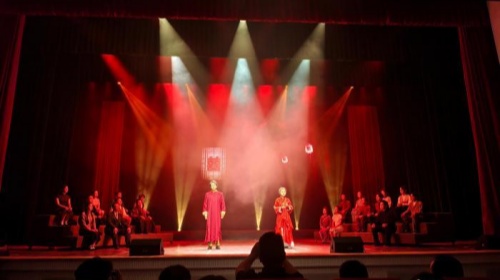
The popularity of Yue Opera's "My Grand View Garden" has sparked a wave of cultural and tourism consumption, prompting the industry to deeply consider how to creatively transform the profound wisdom and unique aesthetics contained in the treasure trove of traditional Chinese opera into contemporary art creations such as drama and film, and further expand the new realm of the national performance system? The traditional Chinese opera art is profound and extensive, and its unique aesthetics and wisdom in character shaping provide a source of vitality for the exploration of the nationalization of the Chinese theatrical performance system. In the process of seeking national charm in contemporary art, creators have become increasingly aware that the essence of using opera aesthetics lies in borrowing its way of thinking, rather than rigidly imitating its procedural movements. The key to application lies in grasping the "procedural thinking" of characters in traditional Chinese opera. Chinese opera has built a sophisticated language system for character types based on the foundation of the roles of Sheng Dan Jing Chou. In every gesture, the age, identity, and temperament of the characters suddenly emerge. This highly condensed programming language provides actors with a grip to capture the tone of their characters. But application is not a direct copy. Famous Peking Opera performer Mei Lanfang created the Yu Ji sword dance for "Farewell My Concubine", blending the heroic martial arts of Zhi Wei Sheng with the toughness of Lao Sheng, ultimately becoming a classic; Performing artist Wu Xingguo used the clown style as the basis for his work "Waiting for Guotuo" and also drew inspiration from the portrayal of the old man and old woman in "Qingfeng Pavilion", allowing the characters to freely express themselves in the style while revealing profound philosophy. The beauty of application lies in transcending external appearances and integrating the essence of traditional Chinese opera into the characters. Successful adaptation works often do not pursue "acting like", but rather incorporate the composition rules of traditional Chinese opera, such as "round and round curves, dynamic and static contrasts", as well as the essence of "combining form and spirit, and matching emotions and eyes", naturally into the actors' performance rhythm and visual awareness. The plays "Fusheng" directed by Wang Xiaoying and "Green Snake" directed by Tian Qinxin do not have obvious theatrical symbols, but their freehand brushwork, dynamic spatial flow, and classical emotions in their movements all deeply embody the essence of Eastern aesthetics, achieving contemporary expression of theatrical aesthetics through resemblance. The use of simplicity over complexity and the interplay of reality and virtuality in traditional Chinese opera to create a space of wisdom is particularly worthy of application. Traditional stages are often empty, but with the performances of actors such as "rounding the stage" and "riding horses", they transform into countless mountains and rivers in the hearts of the audience. The performance of bamboo raft scenes in the play "Chinese Dream" deeply embodies the charm of traditional Chinese opera. The actors simulate the ups and downs of the river with their body movements, and their two young hearts quietly approach each other amidst the turbulence. The blank space on the stage showcases the poetic essence of the East. In today's rapidly changing stage technology, regaining the freedom to create time and space through performance is precisely a return to the essence of art. To grasp its meaning and forget its form, to draw on its spirit and shape my soul - the application of opera aesthetics is to question the door of tradition with contemporary thinking, and to seek the expression of national charm in the era between similarity and dissimilarity. This is not a simple replication of ancient art forms, but rather a rejuvenation of the Chinese aesthetic genes on the stage of the times, opening up a broader world for Chinese theatrical performance art through innovation and adherence to tradition. (New Society)
Edit:ZhiWei Responsible editor:WangHai
Source:news.cn
Special statement: if the pictures and texts reproduced or quoted on this site infringe your legitimate rights and interests, please contact this site, and this site will correct and delete them in time. For copyright issues and website cooperation, please contact through outlook new era email:lwxsd@liaowanghn.com
 Recommended Reading Change it





 Home
Home

