Vitality surges eastward - China's high-level opening-up generates global economic and trade cooperation attraction
2025-09-15
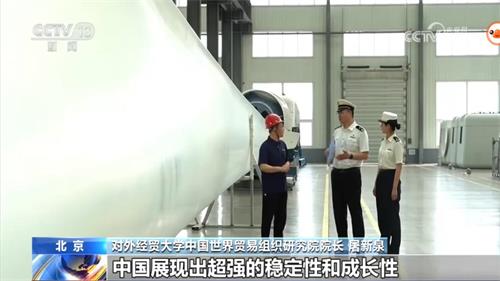
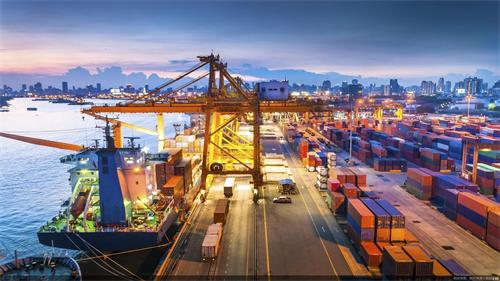
Mutual communication leads to progress, while mutual closure leads to retreat. Throughout the process of international economic and trade development, this law has been deeply validated. Against the backdrop of the current global economic downturn and intensified protectionism, China continues to promote high-level opening-up, maintain development vitality, and demonstrate economic resilience. Both the recently released data on China's foreign trade and the recent popularity of foreign businesses towards the Chinese market at international exhibitions fully confirm China's economic confidence and market attraction. An open and developing China is attracting more countries to join hands in economic, trade, and investment cooperation, building an open world economy, and jointly addressing global risks and challenges. The "friend circle" of China's foreign trade highlights vitality with increased quantity and quality. The latest foreign trade data shows that against the backdrop of rising trade protectionism, China's overall exports are on the rise, and countries and regions still welcome Chinese goods, especially those in the global South. It should be recognized that establishing protectionist barriers is a manifestation of lack of confidence, and building high walls to restrict foreign trade will only weaken one's own vitality. Faced with a complex and ever-changing external environment, China's foreign trade continues to maintain a steady growth trend, with a continuously optimized structure, resilience, and vitality constantly released. According to data from the General Administration of Customs, the total import and export value of China's goods trade increased by 3.5% year-on-year in the first eight months of this year. From the monthly trend, the total import and export value of goods trade in August increased by 3.5% year-on-year, and the monthly export and import of foreign trade achieved double growth for three consecutive months. Specifically, advanced manufacturing products provide strong support for the stable growth of foreign trade. In the first eight months, China's exports of mechanical and electrical products increased by 9.2% year-on-year, accounting for over 60% of the total exports. Among them, the export of integrated circuits and automobiles has grown significantly, with growth rates of 23.3% and 11.9% respectively. From the "circle of friends" perspective, in the first eight months of this year, ASEAN and the European Union were China's top two trading partners. The total trade value between China and ASEAN increased by 9.7% year-on-year, accounting for 16.7% of China's total foreign trade value; Imports and exports to the European Union increased by 4.3%. Over the same period, China's total import and export to countries jointly building the "the Belt and Road" increased by 5.4%. According to analysis reports from institutions such as The Economist Intelligence Unit in the UK and Eurasia Group in the US, China's foreign trade has shown stronger resilience than expected. Despite a decline in imports and exports to the US, its performance in other directions has been better than last year. The New York Times reported that China is accelerating its expansion into emerging markets such as Southeast Asia, Africa, and Latin America, highlighting the resilience and competitiveness of Chinese companies in competing overseas. It has been proven that conducting international trade based on comparative advantages and achieving common development can benefit all parties involved. The latest research report released by the China Brazil Entrepreneurs Council shows that over 40000 Brazilian companies imported goods from China last year, and these companies have created 5.2 million job opportunities for Brazil in 2022. Camila Amigo, one of the authors of the report, said that as Chinese manufacturers invest overseas, Brazil has the opportunity to continue benefiting from the constantly evolving supply chain. During this month's Munich International Auto Show in Germany, Kang Linsong, President of the European Automobile Manufacturers Association and Chairman of the Board of Directors of Mercedes Benz Group, stated in an interview with Xinhua News Agency that "more deeply rooted in China and more localized" is the original intention of the enterprise to deeply cultivate the Chinese market for 20 years, and it is also its strategic choice to seize the initiative and face the future in the global automotive industry transformation. On the eve of the auto show, BMW's "new generation" electric vehicle iX3 made its global debut and will launch a long wheelbase version in China in 2026. BMW Group Chairman Zipser stated that this is the BMW model with the highest degree of "Chinese localization" to date. "It not only responds to the needs of Chinese consumers, but also sends a firm signal of BMW's long-term deep cultivation in the Chinese market. Deeply cultivating China is not only the original intention and development strategy of European car companies, but also a rational choice for investors from various countries. As of the end of last year, foreign investors had invested and established nearly 1.24 million enterprises in China, with actual use of foreign capital of 20.6 trillion yuan. Last year, China established nearly 60000 foreign-invested enterprises, a year-on-year increase of 9.9%. In the past five years, the return on foreign direct investment in China has been about 9%, ranking among the top in the world. At the just concluded 25th China International Fair for Investment and Trade, tens of thousands of guests and businessmen from various countries came to discuss cooperation. This investment fair attracted representatives from over 120 countries and regions, with a total of 1154 investment projects signed and a planned total investment of 644 billion yuan. As the guest country of honor at this year's China International Fair for Trade and Investment (CIFIT), the UK has sent its largest delegation in the history of CIFIT. British Trade Ambassador to China, Niles, stated that the Chinese economy has greater opportunities and growth potential in many fields, and is full of confidence in British companies entering the Chinese market and growing stronger. Australia, which served as the guest of honor at the China International Fair for Trade in Services for the first time this year, has also formed the largest exhibition group since its participation. Dale Pinto, Global President and Board Chairman of the Australian Institute of Certified Public Accountants, stated that China's service trade is accelerating its transformation, which not only enhances the domestic economic growth momentum, but also enhances the ability to provide high-quality innovative services to international partners, continuously stimulating the growth potential of global service trade cooperation. China's economy is full of vitality and attracts traders and investors from various countries to move eastward, sharing development opportunities with the world at a high level of openness. But the deeper logic is that they trust China's consumer market, industrial system, and innovation ecology, trust China's high-level opening-up to the outside world - promoting trade and investment liberalization and facilitation, actively sharing opportunities in super large markets with the world, and promoting mutual benefit and win-win outcomes. According to data released by the Chinese Ministry of Commerce in July, the size of China's consumer market remains the second largest in the world, with an average annual growth rate of 5.5% in total retail sales of consumer goods over the past four years. It is expected to exceed 50 trillion yuan this year. At the same time, China's supply chain system, engineering capabilities, and digitalization process have made China an important pivot for research and innovation. Kang Linsong said that China has excellent industrial talents and a vibrant innovation ecosystem. Chinese customers have an open mindset and are willing to try new technologies, which drives the innovation process of enterprises. The innovative products and technologies developed in collaboration with Chinese partners not only meet the needs of Chinese customers, but also benefit the global market. Liao Yijian, Co CEO of HSBC Group in Asia and the Middle East, believes that multinational companies are optimistic about and increasing investment in high-end manufacturing, healthcare, pharmaceuticals, and other industries in China, and remain optimistic about the development of consumer related industries. Global enterprises are positioning China as a global market that drives innovation, consumption, and growth. Currently, China's negative list for foreign investment access continues to be reduced, all restrictions on foreign investment access in the manufacturing sector have been lifted, 100% tariff free treatment has been granted to all least developed countries that have established diplomatic relations, and visa free entry and transit policies have been optimized... China is steadily expanding its institutional opening-up and continuously expanding the breadth and depth of opening-up. Paul Bateman, Global Chairman of Morgan Asset Management, stated that high-level openness runs through the Chinese economy and China is ushering in new opportunities. Investing in China is investing in the future
Edit:Yi Yi Responsible editor:Li Nian
Source:www.news.cn
Special statement: if the pictures and texts reproduced or quoted on this site infringe your legitimate rights and interests, please contact this site, and this site will correct and delete them in time. For copyright issues and website cooperation, please contact through outlook new era email:lwxsd@liaowanghn.com
 Recommended Reading Change it












 Home
Home

