The company's unauthorized "face swapping" template production has been found to be infringing
2025-11-24
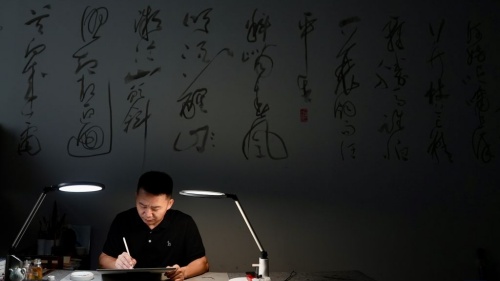
Recently, the Beijing Internet Court announced a dispute over liability for network infringement. The court held that the defendant's unauthorized use of AI face swapping on someone else's video constituted a violation of their personal information rights. Therefore, the court ruled that the defendant, a technology and cultural company, should apologize in writing to the plaintiff, Liao, and compensate for their mental losses and emotional distress. Liao is an ancient style short video blogger with a large number of fans across the internet. He found that a certain technology and culture limited company used its own series of videos without authorization and consent to create face changing templates, and uploaded them to a certain software for users to use for profit. Liao believes that the company's actions have infringed upon his portrait rights and personal information rights, so he filed a lawsuit with the court, demanding a written apology and compensation for economic and mental losses. In the trial, the defendant, a certain technology and culture limited company, believed that the videos released by the platform were all from legitimate sources, and the facial features were not the plaintiff's, so the company did not infringe on the plaintiff's portrait rights. In addition, the "face swapping technology" used in the software involved was actually provided by a third party, and the company did not process the plaintiff's personal information, which did not infringe on the plaintiff's personal information rights. The court believes that the defendant's actions do not constitute an infringement of the plaintiff's right to portrait. The makeup, hairstyle, clothing, actions, lighting, and camera switching of the face changing template video involved in the case are consistent with those of the series of videos created by the plaintiff, but the facial features of the person appearing on screen are not the same and are not the plaintiff. The software involved in the case implements face swapping functions through the services of third-party companies, and users can unlock all face swapping functions by paying membership fees. The key to determining whether the right of portrait has been violated lies in whether it has recognizability. recognizability emphasizes that the essence of a portrait is to point to a specific person, and the scope of the portrait is centered around the face, which may also involve unique body parts, sounds, and specific actions with high recognizability that can correspond to specific natural persons. In this case, although the defendant used the plaintiff's video to create a video template, they did not use the plaintiff's portrait. The makeup, hairstyle, clothing, lighting, camera switching, and other elements retained in the template are not inseparable from specific natural persons, but differ from the innate personality elements of natural persons. At the same time, the defendant's provision of video templates to users did not defame, defile, or forge the plaintiff's portrait, therefore, it does not constitute an infringement of the plaintiff's portrait rights. The court believes that the defendant's actions constitute an infringement of the plaintiff's personal information rights. The defendant collected appearance videos containing the plaintiff's facial information and replaced the plaintiff's face in the video with the face in the photo provided by themselves. The synthesis process requires the fusion of features from the new static image with facial features, expressions, and other parts of the original video through algorithms. The above process involves the collection, use, analysis, etc. of the plaintiff's personal information, which belongs to the processing of the plaintiff's personal information. The defendant's handling of this information without the plaintiff's consent constitutes an infringement of the plaintiff's personal information rights. If the defendant uses videos made by others without authorization and infringes on the creative labor achievements of others, the corresponding rights holder should claim their rights. In the end, the court ruled that the defendant should apologize in writing to the plaintiff and compensate for the plaintiff's mental losses and emotional distress. The judgment is currently in effect. Sun Mingxi, Vice President of the Beijing Internet Court, believes that in recent years, the abuse of AI synthesis technology is common, including the use of AI face changing, voice synthesis and other acts of spoofing, producing false information, which may involve civil liability, administrative liability and even criminal liability. Specifically, unauthorized use of someone else's portrait or voice synthesized content directly infringes on personality rights, and the perpetrator shall bear civil liabilities such as cessation of infringement, apology, and compensation for losses. Failure to prominently label synthesized content violates network information management regulations and may result in administrative penalties such as warnings, fines, and even suspension of business for rectification. Illegally obtaining or leaking biometric information may constitute the crime of infringing on citizens' personal information; Using forged videos to commit fraud and extortion constitutes corresponding property crimes; Producing and disseminating obscene composite content may also be suspected of the crime of producing and disseminating obscene materials. (New Society)
Edit:Wang Shu Ying Responsible editor:Li Jie
Source:Rule of Law Daily
Special statement: if the pictures and texts reproduced or quoted on this site infringe your legitimate rights and interests, please contact this site, and this site will correct and delete them in time. For copyright issues and website cooperation, please contact through outlook new era email:lwxsd@liaowanghn.com
 Recommended Reading Change it

















 Home
Home

