What rights protection points should be paid attention to in property disputes (focusing on the rule of law)
2025-12-12
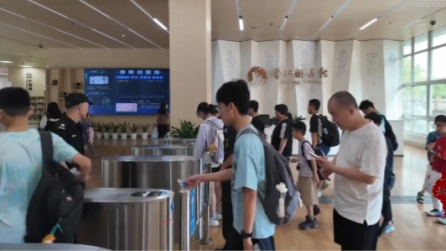
The Supreme People's Court has released typical cases to respond to the concerns of the public in the property field. What are the key points to pay attention to in property disputes (focusing on the rule of law)? In recent years, conflicts between property owners and property service providers have occurred from time to time, and have shown characteristics such as easy recurrence and difficult resolution. The Supreme People's Court recently released 5 typical cases of property service contract disputes, responding to issues of public concern in the property field such as the collection methods of property fees and the difficulty of handover after the termination of property service contracts. The aim is to fully leverage the demonstrative and guiding effects of typical cases, unify the rules of judgment, and prevent and resolve conflicts in property disputes. The Supreme People's Court actively responds to public concerns, guides people's courts at all levels to properly respond to new situations and problems in the property field, substantially resolves civil disputes including property service contract disputes, and focuses on promoting the resolution of urgent and difficult problems that the people are looking forward to. Property service providers cannot collect property fees by restricting the use of access control systems or other means. [Case] Zhang, a resident of a certain community, discovered that he was prohibited from using the elevator and access control system of his residential unit by the community property company due to unpaid property fees. After unsuccessful negotiations with a property management company, Zhang filed a lawsuit to the court, requesting the restoration of his use of the elevator and access control system. The court held that although Zhang owed property fees, a certain property management company should not have used methods such as not activating the access card to prevent the owner from entering the unit door or using the elevator access control system to collect property fees. Zhang's breach of contract for unpaid property fees may be protected by a property management company in accordance with the law. After being legally explained by the court, a property management company restored Zhang's use of the door prohibition system. According to the Civil Code, property service providers are not allowed to use methods such as stopping power supply, water supply, heating, or gas supply to collect property fees. The property service provider's collection of property fees through methods such as not activating access cards for owners and restricting the use of elevators is essentially based on their creditor's rights under the property service contract and improperly restricts the owners' ownership of the building, which lacks legal basis and exceeds reasonable and necessary limits. The Supreme People's Court reminds that property service providers should use reasonable and legal methods to collect property fees. If the owner fails to pay the property fees within a reasonable period after being urged, the property service provider can protect their legitimate rights and interests through mediation, litigation, or arbitration, but should not collect fees in a way that affects the normal life of the owner. The property management company refuses to leave the venue and cannot require the owners to pay the property fees after the termination of the contract. [Case] The owners' committee of a certain community has informed the property management company in writing that a new property service provider will be selected after the original property service contract expires, and invited them to actively participate in the bidding. A property management company responded by stating that the original property service contract will automatically terminate upon expiration. Afterwards, the community hired a new property service provider and signed a "Property Management Service Contract" with them. The property management committee notified a certain property company to handle the handover matters in a timely manner, but they did not leave within a reasonable period of time, resulting in the new property service provider being unable to enter the site for a long time. A property management company has filed a lawsuit with the court for failing to collect property fees from the owner He after the termination of the original property service contract. The court held that a certain property company, after the termination of the original property service contract, failed to fulfill its handover obligations to the new property service provider as required by the property management committee. Even after being clearly informed of the legal consequences, it still refused to withdraw from the property service area and could not request the owner to pay the property fees after the termination of the property service contract. Final verdict: Reject the lawsuit request of a property management company. According to the Civil Code, in the event of termination of a property service contract, the original property service provider shall withdraw from the property service area within the agreed or reasonable period, return the property service premises, related facilities, necessary materials for property services, etc. to the owners' committee, the owners who have decided to manage themselves, or their designated persons, cooperate with the new property service provider to complete the handover work, and truthfully inform them of the use and management status of the property. If the original property service provider violates the provisions of the preceding paragraph, they shall not request the owner to pay the property fees after the termination of the property service contract; If it causes losses to the property owner, compensation should be made for the losses. Due to conflicts of interest between the new and old property service providers, some of the original property service providers ignored the common wishes of the community owners, continued to occupy the property premises, refused to return relevant materials, and "forcibly occupied in the name of service", causing difficulties for the new property service providers to carry out their work smoothly. The ruling in this case rejecting the lawsuit request of a certain property company is conducive to guiding property service providers to exit on schedule and fulfill their handover obligations in accordance with the law. It has a positive significance for regulating property service behavior and building a harmonious and livable community environment. The original property service provider has no right to file a lawsuit against the decision of the owners' meeting to hire a new property service provider. [Case] A certain property company was selected as the preliminary property service provider by a certain community construction unit. Later, the community held a owners' meeting and made a decision to dismiss a certain property management company and hire a new property service provider. The community committee and the new property service provider have signed a separate property service contract. The property management company believes that the decision made by the community owners' meeting to select and hire a new property service provider does not comply with the legal provisions regarding the exclusive area and proportion of the number of owners for voting on matters jointly decided by the owners. The lawsuit requests confirmation that the decision is invalid. The court held that a certain property company is not the owner of the community, is not bound by the decision of the owners' meeting, and has no direct interest in the decision of the sued owners' meeting. Therefore, it has no right to sue for the revocation of the decision of the owners' meeting or to confirm its invalidity. Final ruling: Dismiss the lawsuit filed by a property management company. According to the Civil Code, the selection and dismissal of property service enterprises should be jointly decided by the owners. The decisions of the owners' meeting or owners' committee have legal binding force on the owners. The decision of the owners' meeting is an important way for owners to exercise joint management rights and implement owner autonomy over major issues in the community. The decisions made by the owners' assembly have legal binding force on the owners and do not directly bind entities other than the owners. Therefore, the property service provider does not have the necessity and effectiveness to appeal to the people's court to make a judgment on the effectiveness of the decisions made by the owners' assembly. If the original property service provider believes that the termination of the property service contract has caused their losses, they may make a separate claim. The Supreme People's Court stated that in this case, it is clear that the property service provider cannot file a lawsuit against the decision of the owners' meeting to select a new property service provider, which has a guiding role in rules and is conducive to maintaining the effectiveness of the owners' meeting's decision and legally safeguarding the exercise of joint management rights by owners. (New Society)
Edit:Wang Shu Ying Responsible editor:Li Jie
Source:people.cn
Special statement: if the pictures and texts reproduced or quoted on this site infringe your legitimate rights and interests, please contact this site, and this site will correct and delete them in time. For copyright issues and website cooperation, please contact through outlook new era email:lwxsd@liaowanghn.com
 Recommended Reading Change it





















 Home
Home

