Shandong Jiaxiang: A Millennium Cultural Heritage with New Colors
2025-12-12
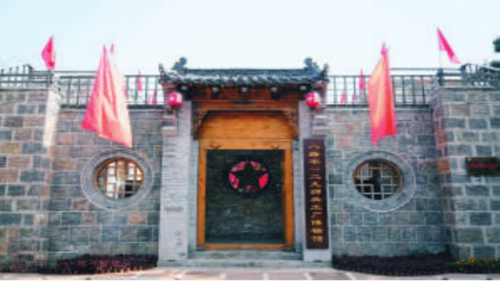
Recently, the publication of "Epic on the Stone: The Art of Han Paintings and Stone Carvings in the Wushi Temple" has attracted widespread attention in the academic community, and has once again brought the rich stone carving cultural resources of Jiaxiang County, Shandong Province into the spotlight. The Wushi Tomb Group Stone Carving Museum, located in Jiaxiang County, is famous for its grand scale and well preserved Han steles and Han portrait stone groups. This museum is not only one of the first national key cultural relics protection units announced by the State Council, but also a living source that continues to nourish contemporary folk cultural innovation and the integration of county-level cultural tourism. Look, the carriage on the Han portrait stone carving is running! ”In the interactive experience area of the Wushi Temple Museum, tourists hold special light pens and gently wave them in front of the exhibition area. The Han Dynasty carriage and horse guards projected on the walls move in response, vividly depicting life scenes spanning thousands of years in the interplay of light and shadow. In order to revitalize and utilize cultural relics, Jiaxiang County strengthens the technological empowerment of cultural relics display, collects three-dimensional and texture information of Han portrait stones in the Wushi Temple through laser scanning, establishes a digital comprehensive management system for Han portrait stones under national protection, and enhances the digital experience of Han portrait stones. At the same time, oblique photography is used to achieve three-dimensional reconstruction of immovable cultural relics such as ancient buildings and stone carvings, and geographic planning software is used to plan and produce the "Jiaxiang County Cultural Relics Map". Design themed exhibitions such as "Idiom Stories in Chinese Portrait Stones", use VR technology to create digital exhibition spaces, and collaborate with Tsinghua University to develop a Chinese painting human-computer interaction experience system. Not only should cultural relics be preserved, but they should also live well. ”Zhu Weihua, the director of the Wushi Tomb Group Stone Carving Museum, introduced that in addition to introducing advanced technology, they have also completed high-precision digital collection of all stone carvings, which not only provides accurate data support for cultural relic protection, but also becomes a valuable resource for cultural and creative development and educational promotion. What we inherit is not only skills, but also the genes of culture. ”In the study classroom of the "University Academy" in Jiaxiang County, children focus on learning the technique of Han portrait stone printing under the guidance of intangible cultural heritage inheritors. When the black Tuobao gently tapped on the rice paper and the Fuxi and N ü wa pictures on the stone gradually became clear, the children's faces were filled with surprise and admiration. The artistic spirit originating from the Wushi Temple deeply nourishes the rich folk art heritage of Jiaxiang. Behind every Han painting statue in Wushi Temple is a historical story, and I often come here to seek inspiration. Zhou Guangsheng, a representative inheritor of Jiaxiang wood carving, a provincial-level intangible cultural heritage site, has been committed to integrating Han painting elements into wood carving creation for many years. In his studio, the Four Treasures of the Study, such as "Chariots and Horses Traveling," inspired by the Wuliang Temple, not only retain the grandeur of Han Dynasty art, but also meet the aesthetic needs of modern people. The annual sales exceed 20 million yuan, demonstrating a thriving market vitality. In recent years, Jiaxiang County has been deeply practicing the concept of creative transformation and innovative development of excellent traditional Chinese culture, taking the revitalization and utilization of the Wushi Temple as a breakthrough point, and building a three-dimensional protection system of "technology empowerment+academic cultivation+diversified dissemination". At present, the county has 5 national level intangible cultural heritage projects and 5 provincial-level projects; Has 3 national level representative inheritors and 5 provincial-level inheritors; Build 2 intangible cultural heritage venues and 5 specialized museums; Build 10 intangible cultural heritage workshops such as Zhou Guangsheng wood carving and Jiaxiang stone carving, and develop over 800 cultural and creative products. Taking the Wushi Temple as the core, Jiaxiang County has planned the "Zengmiao Wushi Temple University Academy" boutique study route and launched the "World Carved on Stone" study route. Empowered by technology, the visiting experience of the Wu Clan Ancestral Hall has undergone a transformation from "static observation" to "immersive interaction". Since the beginning of this year, the Wushi Temple has received a total of 75000 visitors. At the same time, Jiaxiang County actively promoted the fourth national cultural relics census, with a total of 566 cultural relics surveyed and 122 new cultural relics discovered. The integration of culture and tourism has changed the urban and rural landscape of Jiaxiang County. Through the implementation of the "Revitalization" action for scenic spots, 8 A-level scenic spots have been upgraded with "one scenic spot, one plan", and the transformation and upgrading of food streets, imaginative flower seas, Longquan Lake, and beautification and lighting have been completed, giving the scenic spots a completely new look. From January to October this year, the county received over 6 million visitors of various types, driving tourism consumption of over 600 million yuan. From the stone epic that has been dormant for thousands of years, to the vibrant folk art, and to the cultural and tourism industry that enriches the people and strengthens the county, Jiaxiang County has explored an innovative path of "shaping tourism with culture and showcasing culture with tourism". (New Society)
Edit:Wang Shu Ying Responsible editor:Li Jie
Source:guangming daily
Special statement: if the pictures and texts reproduced or quoted on this site infringe your legitimate rights and interests, please contact this site, and this site will correct and delete them in time. For copyright issues and website cooperation, please contact through outlook new era email:lwxsd@liaowanghn.com
 Recommended Reading Change it










 Home
Home

