The legal difficulties of unmanned delivery vehicles on the road urgently need to be solved
2026-01-05
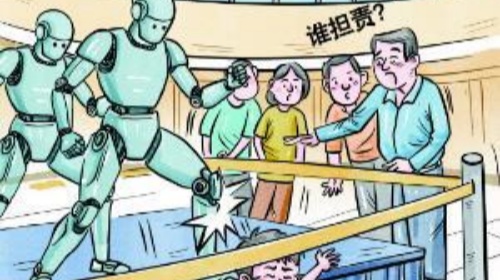
Under the sunset, in the autonomous driving demonstration zone of Yizhuang, Beijing, unmanned delivery vehicles and traditional vehicles are driving in an orderly manner. Behind this is the emerging force of unmanned delivery vehicles landing in multiple cities in recent years, becoming the "last mile" of logistics. However, unexpected incidents caused by unmanned delivery vehicles on the road have also emerged. Not long ago, Ms. Wang, a resident of Xi'an City, Shaanxi Province, collided with an unmanned delivery vehicle during the morning rush hour. According to her introduction, at that time, the unmanned delivery vehicle entered the non motorized lane from the main road and slightly deviated while avoiding vehicles parked on the roadside, causing a collision with her car. It is an autonomous vehicle, who should be held responsible if an accident occurs? ”Ms. Wang gathered around the vehicle to take photos and collect evidence, while also making a call to the police. This scene reflects the real dilemma behind the accelerated landing of autonomous driving technology - the entry of unmanned delivery vehicles into the streets brings a series of legal problems that urgently need to be solved. The clear division of responsibility for accidents and the qualification of unmanned delivery vehicles on the road are the primary concerns of the public. Regarding this, Professor Tao Yang from the Law School of Beijing Jiaotong University stated that there is currently no unified qualification requirement for unmanned delivery vehicles at the national level, and only a few places have issued relevant regulations for unmanned delivery vehicle manufacturers and vehicle technical parameters. According to Feng Jue, a reviewer at the Institute of Law of the Chinese Academy of Social Sciences, China's regulations and policies on unmanned delivery vehicles are still in their infancy, mainly relying on local regulations and pilot project policies. Considering the miniaturization, lightweight, low-speed, and autonomous driving characteristics of unmanned delivery vehicles in fields such as food delivery, supermarkets, and express delivery, it may be necessary to introduce separate regulations at the national level in the future to adapt to their operational characteristics and scenarios. At present, the relevant provisions have not yet clarified its relationship with general autonomous vehicle. In local practice, Feng Jue introduced that the "Beijing Management Measures for Road Testing and Commercial Demonstration of Unmanned Delivery Vehicles (Trial)" released in February 2023 (hereinafter referred to as the "Beijing Management Measures") stipulate a series of prerequisites for unmanned delivery vehicles to be put on the road, including meeting product requirements and obtaining qualified reports from testing institutions, completing testing projects and obtaining closed place testing evaluation reports, having three operating modes and being able to safely and quickly switch, purchasing liability insurance for each vehicle for no less than 3 million yuan, having the ability to execute minimum risk strategies, being able to remind traffic participants through sound and light, having vehicle status record storage and online monitoring functions, etc. The "Management Measures for Testing and Application Pilot of Functional Unmanned Vehicles in Nanshan District, Shenzhen (Trial)" (hereinafter referred to as the "Shenzhen Nanshan District Management Measures") issued in January 2025 also stipulate basic parameter requirements for functional unmanned vehicles, including unmanned delivery vehicles. In addition to qualifications, the determination of accident liability is also a matter of great concern to the public. Tao Yang pointed out that currently, it is not clear whether unmanned delivery vehicles belong to motor vehicles or non motor vehicles. If the Road Traffic Safety Law is directly cited for liability determination, it will be difficult to directly apply due to unclear vehicle attributes and lack of driving subject. In practice, responsibility determination is more directed towards vehicle managers or owners, but this "one size fits all" approach is not scientific because the causes of accidents may involve various factors such as vehicle design defects, algorithm providers, remote security personnel, hacker attacks, etc. Feng Jue also stated that the core difficulty in determining responsibility lies in the qualitative analysis of unmanned delivery vehicles, whose participation in road traffic carries risks between motor vehicles and non motor vehicles, and there is currently controversy over the principle of attribution. However, the "Beijing Management Measures" clarify the requirements for the passage of unmanned delivery vehicles, such as driving in the non motorized lane, avoiding pedestrians and non motorized vehicles, etc., providing a reference for the responsibility determination of traffic police departments. The requirement to purchase liability insurance is also conducive to victims obtaining timely relief. Who will be the main body responsible for the accident? According to Feng Jue, the "Beijing Management Measures" stipulate that the responsible parties for accidents include drivers, road testing subjects, commercial demonstration subjects, etc. Traffic violations are punished by drivers; The "Management Measures for Nanshan District, Shenzhen" did not specify the driver, so it was replaced by a safety officer. Both regulations do not list manufacturers or technology developers as responsible parties. It is speculated that the reason is that unmanned delivery vehicles have obtained product qualification reports and closed test evaluation reports before they hit the road, and it is presumed that the accident was not caused by product defects. However, if it is later found that there are quality defects, manufacturers and technology developers will be held responsible for the product. Tao Yang stated that in practice, responsibility is primarily attributed to vehicle management or operation companies, but this approach lacks clear legal basis and only a few places have relevant regulations. Feng Jue proposed that the "Beijing Management Measures" require each unmanned delivery vehicle to be equipped with one driver. Although it is reasonable in the testing and demonstration stage, in the long run, it is not conducive to realizing its application potential and economic efficiency. The purpose of unmanned delivery is to replace human labor and improve efficiency, but equipping each vehicle with a driver actually increases the cost of the enterprise. We should face up to the reality and application prospects of "unmanned" technology, which is mainly responsible for safe operation by (remote) security personnel, and the responsibility for accidents should be borne by commercial operation enterprises as the main body. Balancing privacy protection and data security, whether the collection of surrounding images and location information by unmanned vehicles during delivery may infringe on citizens' privacy rights has also become a public concern. Tao Yang believes that balancing the demand for delivery and the protection of citizens' privacy rights, the core is to follow the principles of legality, legitimacy, and necessity, strengthen the technical requirements for operators and producers, allow them to collect only the information necessary to achieve delivery functions and control it to the minimum extent, anonymize or anonymize non essential identification data, strengthen data encryption and classification storage, and give users the right to know and choose. Feng Jue stated that the data collected by unmanned delivery vehicles may involve personal privacy, such as location information and consumption habits. Relevant personal information should be protected in accordance with the Personal Information Protection Law, and collected, stored, and used legally. Location information and image data should be anonymized, and identification labels that directly identify individuals should be removed. The "informed consent" and "minimum necessary principle" should be strictly followed, and only information necessary for personal consent or delivery should be collected. The collection of non essential privacy data such as product details and real phone numbers is prohibited. Both experts pointed out that there are shortcomings in the implementation of the Personal Information Protection Law. Feng Jue explained that the scope of personal information in delivery needs to be defined. For example, road and traffic information collected by sensors and anonymized information do not belong to personal information, but identifiable information such as delivery address, recipient, mobile phone number, and surrounding environment belong to personal information; The "informed consent" rule is prone to becoming a formality and requires refinement of the disclosure and consent process; The division of responsibilities for personal information protection is unclear, and unmanned delivery involves multiple parties such as manufacturers, operators, algorithm providers, and platforms, making it difficult to hold accountable for data or privacy breaches and abuses; The "black box" of algorithms has led to regulatory difficulties, making it difficult to assess whether data collection and use comply with the "minimum necessary principle". It is necessary to improve the transparency of algorithms and strengthen administrative supervision. Tao Yang emphasized that emergency response to issues such as system misjudgment and obstacle recognition errors in unmanned delivery vehicles should prioritize safety. The bottom line is to take immediate action to ensure the safety of people and vehicles in the surrounding area, follow the reporting principle, stop vehicles in a timely manner, and repair them. Feng Jue added that regulations in both Beijing and Nanshan District of Shenzhen require testing and demonstration entities to have risk response mechanisms, develop emergency response plans for accidents, malfunctions, severe weather, and other unexpected situations. After an accident occurs, relevant activities should be immediately stopped, the scene should be protected, and the alarm should be called. Light and sound prompts should be used to avoid and prevent secondary accidents. When personnel are injured, emergency calls should be made in a timely manner, and information reporting, cooperation with investigations, data retention, and follow-up work should be done. Building a dynamic response governance system is crucial for promoting the healthy development of the unmanned delivery vehicle industry. Both experts emphasized the need to establish a collaborative governance system that combines technological innovation and legal protection. Feng Jue stated that the revised Science and Technology Progress Law in 2021 stipulates the need to promote the transformation of scientific and technological achievements into real productive forces, and to promote technological innovation to support and lead economic and social development. Therefore, the law can reserve innovation space through the "inclusive and prudent" system, allowing companies to test new technologies within a compliance framework, while setting a bottom line for traffic safety and data privacy compliance, and responding to social concerns; Clarify the responsibility boundaries of unmanned delivery parties in accordance with the law, improve regulatory efficiency, protect user rights and interests, achieve multi-party collaborative governance among the government, enterprises, users, third parties, and the public, and balance innovation and safety. Tao Yang pointed out that unmanned delivery faces multiple challenges such as rapid technological iteration, legal lag, and ambiguous responsibility subjects. A single technological means or legal provisions are difficult to cope with, and a dynamic response, multi-party participation, and risk controllable collaborative governance system must be established. The law should ensure technological innovation while adhering to the safety bottom line and restricting disorderly innovation. Technological innovation can also promote innovative regulatory methods, ultimately achieving safe and orderly development of the unmanned delivery industry. (New Society)
Edit:Wang Shu Ying Responsible editor:Li Jie
Source:Rule of Law Daily
Special statement: if the pictures and texts reproduced or quoted on this site infringe your legitimate rights and interests, please contact this site, and this site will correct and delete them in time. For copyright issues and website cooperation, please contact through outlook new era email:lwxsd@liaowanghn.com
 Recommended Reading Change it













 Home
Home

