Set rules and direction for the development of low altitude economy
2026-02-06
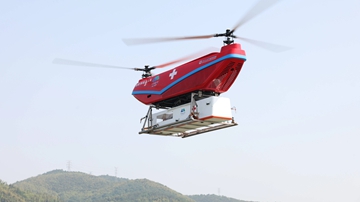
Recently, the State Administration for Market Regulation and ten other departments jointly issued the "Guidelines for the Construction of Low altitude Economic Standard System (2025 Edition)" (hereinafter referred to as the "Guidelines"), focusing on five core areas: low altitude aircraft, low altitude infrastructure, low altitude air traffic management, safety supervision, and application scenarios, to establish a "four-dimensional integration" standard supply system that integrates technical standards and management norms, domestic standards and international rules, mandatory standards and recommended standards, and basic standards and scenario standards. Low altitude economy is an important track for China's strategic emerging industries. What does the release of the 'Guide' mean? What pain points will the implementation of standards solve in the development of low altitude economy? Which areas of the low altitude industry will benefit and what development opportunities will it usher in? First question: What does the release of the 'Guide' mean? Currently, the low altitude economy industry is in its infancy. The entire industry is moving from pilot exploration to large-scale and standardized development. The layout of various links in the industrial chain is accelerating, and the construction of supporting systems urgently needs to be improved. Ding Haiyu, Vice President of China Mobile Research Institute, told reporters that with the rapid development of the low altitude economy industry in recent years, problems such as unclear policy details, inconsistent technical routes, incomplete standard systems, and inadequate infrastructure have become increasingly prominent. For example, fragmented technical solutions for low altitude infrastructure and differentiated interfaces for low altitude data applications have led to low cross regional operational efficiency and difficulty in safety supervision, which has constrained the large-scale development of the industry. In Ding Haiyu's view, the release of the "Guidelines" is the national level leading the construction of a standardized pattern for the national "one game", setting "hard rules" and clarifying the "roadmap" for the development of the low altitude industry, and helping China's low altitude economy develop safely, orderly and on a large scale. With clear technical guidance in the industry, the research and development, construction, and operation costs of enterprises will be significantly reduced, and the low altitude track will usher in an opportunity period. ”Ding Haiyu introduced that taking China Mobile as an example, the "Guidelines" clearly define the standard directions for low altitude communication, navigation, perception, etc., which are highly compatible with its integrated layout of "communication, navigation, and sensing", providing clear guidance for technology research and infrastructure construction. Question 2: What pain points will the implementation of standards solve? The Guidelines specify that by 2027, the standard system for low altitude economy will be basically established, which will basically meet the needs of safe and healthy development of low altitude economy. In Ding Haiyu's view, as the "Guidelines" establish unified technical rules for all links of the low altitude economy industry chain and break down the barriers to large-scale development caused by standard issues, the three major pain points that restrict the safe and healthy development of the industry will be easily resolved. One is to solve the pain points of "decentralized infrastructure construction", unify technical routes, and achieve scale development. In response to the problem of "scattered technical routes and difficult interconnection", the "Guidelines" standardize the data interfaces for low altitude communication, navigation, and perception, which can further promote the collaborative networking of 5G-A communication base stations and integrated sensing base stations to avoid redundant construction. The second is to solve the pain points of "security supervision and operational guarantee" and build a solid bottom line for industrial development security. In response to the problem of "difficulty in tracing the identity of drones", the "Guidelines" have strengthened requirements such as "one machine, one code" and "real name registration". For example, by combining China Mobile's "four in one" identity authentication mechanism, the entire lifecycle of drones can be managed and controlled, "said Ding Haiyu. The third is to address the pain point of the disconnect between technology and demand, and promote the implementation and transformation of innovative achievements. In response to the problem of "difficulty in landing due to lack of standards", the "Guidelines" clarify the performance indicators and testing methods of low altitude equipment and infrastructure, which can provide full chain support for "research and development testing standardization industrialization" for new technologies and products. Question 3: Which areas of the low altitude industry will benefit? As the top-level design of the national low altitude economic standard system, the release of the "Guidelines" lays a solid institutional foundation for the high-quality development of the industry. Ding Haiyu believes that the field of low altitude infrastructure will usher in "standardized development". Clear technical routes and standard requirements for low altitude networked communication, low altitude perception, and high-precision navigation networks are helpful for the large-scale deployment of low altitude infrastructure. The field of low altitude equipment will usher in a "compliance upgrade". The requirements for networking and security specified in the Guidelines will promote the upgrade of drone terminals. We will actively promote the use of 5G communication modules and dedicated SIM cards as standard equipment in the front-end market to enhance drone security control. ”Ding Haiyu said. At the same time, the application field of the low altitude industry will usher in a "large-scale landing". For example, in low altitude inspection scenarios, standardized networking technology greatly improves the reliability of drone inspections in power, oil and gas pipelines, and communication base stations, and multi machine collaborative inspections have become the norm in the industry; In emergency rescue scenarios, relying on trusted access and real-time communication support, commercial applications such as low altitude emergency communication and medical material transportation are accelerating their implementation; In the context of security supervision, a unified identity traceability and control standard enables the continuous release of application demands such as low altitude monitoring and electronic fences, promoting the standardized promotion of low altitude services in more segmented scenarios. (New Society)
Edit:Momo Responsible editor:Chen zhaozhao
Source:Science and Technology Daily
Special statement: if the pictures and texts reproduced or quoted on this site infringe your legitimate rights and interests, please contact this site, and this site will correct and delete them in time. For copyright issues and website cooperation, please contact through outlook new era email:lwxsd@liaowanghn.com
 Sci-Tech
 Recommended Reading Change it

















 Home
Home
