Shen Baozhen's former residence: Every brick and stone is engraved with memories of the family and country
2026-03-31
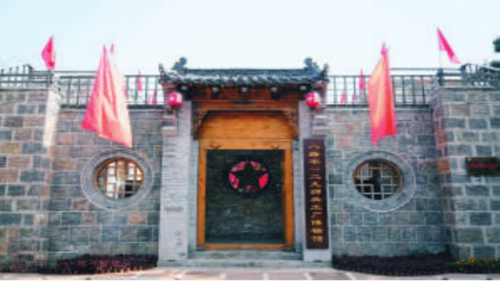
In March of spring, the main street of Sanfang Qixiang in Fuzhou, Fujian is bustling with tourists. Turning into the depths of the 'Palace Lane', an ancient mansion with a vermilion painted gate comes into view, which is the 'Former Residence of Shen Baozhen'. From the appearance, the ancient mansion is low-key and simple, forming a sharp contrast with the heavy history it carries. According to on-site staff, during the reign of Emperor Tongzhi of the Qing Dynasty, Shen Baozhen purchased this Ming Dynasty ancient mansion and lived there for more than ten years. Shen Baozhen is known as the "father of China's modern navy" and the initiator of Taiwan's modernization process. It is here that he served as the Governor of Jiangxi, the Prime Minister of Shipping, and the Imperial Envoy to Taiwan. This simple courtyard is a witness to Shen Baozhen's founding of the shipping administration, patrolling Taiwan to drive out invaders, and developing and building Taiwan. Every brick and stone is engraved with memories of his homeland crossing the strait. Entering the courtyard, one can see that the three courtyards maintain the overall style of the Ming Dynasty, while also retaining decorations from the Qing Dynasty and Republican era renovations. "The renovation of ancient buildings is generally completed according to the current popular style, so the original big wooden beam frame of the former residence was in the Ming Dynasty, and some of the doors and windows, arch of wooden architecture, etc. replaced in the later period were all in the style of the Qing Dynasty." Qiu Shoulian, a member of the expert database of Fuzhou Cultural Relics Protection Project, explained that the last renovation of the ancient residence was completed in 2024, presenting the current appearance. As soon as they entered the hall, the reporter was attracted by the exhibition of Shen Baozhen's life and historical sites. As the staff talked about it, the reporter's thoughts also returned to more than 150 years ago. In 1874, Japan launched a fierce invasion of southern Taiwan. At that time, Shen Baozhen served as the Minister of Shipbuilding in Fujian, overseeing shipbuilding and naval talent development. In response to this crisis, the Qing court awarded Shen Baozhen the title of "Minister of Coastal Defense and Foreign Affairs for Taiwan and other regions", with full responsibility for handling the Japanese invasion of Taiwan. After receiving the order, Shen Baozhen formulated strategies such as "joint diplomacy, storage of weapons, storage of talents, and communication of information" based on the situation, and personally led warships such as "Wannian Qing", "Fubo", and "Fuxing" manufactured by Mawei Shipbuilding to cross the Taiwan Strait to resist the Japanese invasion of Taiwan. On the display board, there is a painting titled 'Shen Baozhen's Tour of Taiwan' which reflects the situation at that time. I saw Shen Baozhen standing on the ship command post, gazing into the distance across the strait, with the "Imperial Envoy" flag behind him particularly prominent. After arriving in Taiwan, Shen Baozhen sent a letter to Japan, solemnly declaring that the size of China's territory cannot be given to anyone! At the same time, he accelerated the preparation for war, adjusted the defense layout on the island, built more fortifications, deployed elite troops to Taiwan, vigorously raised combat materials, and united local people to jointly fight against the enemy. With the implementation of a series of measures, the island's defense forces have gradually strengthened, forming a strong deterrence against the invading Japanese army in Taiwan. The Japanese army was forced to withdraw from Taiwan in December 1874. This crisis has made Shen Baozhen deeply aware of the weakness of Taiwan's defense. Only by developing and building Taiwan can we defend our territory. He proposed to lift the ban on land reclamation and encourage mainland Chinese people to move to Taiwan and cultivate "aboriginal land"; Promote the opening of mountains to pacify the aboriginal people, open up three roads in the south, north, and central regions, break down the transportation barriers between the east and west of Taiwan, and establish "aboriginal schools" in ethnic minority areas to teach Chinese and agricultural techniques; He also established prefectures and counties, expanding Taiwan's administrative system into two prefectures, eight counties, and four departments; Establishing Keelung Coal Mine and introducing Western coal mining and oil extraction machinery. This series of measures initiated the process of modernization in Taiwan. Of particular importance, he proposed the relocation of the Fujian governor to Taiwan. Since then, the Fujian governor has been stationed in Taiwan every winter and spring, and in Fuzhou every summer and autumn, which has further strengthened cross-strait relations and laid the foundation for the later establishment of Taiwan as a province. On the occasion of commemorating the 150th anniversary of Shen Baozhen's tour of Taiwan, Shen Lusui, the sixth generation descendant of Shen Baozhen and a senior producer in Taiwan, brought a special gift from Taiwan - a replica of Shen Baozhen's handwritten wooden couplet. Seeing the completion of the renovation of Shen Baozhen's former residence, brick by brick and tile by tile, restored to its original state, Shen Lv expressed great emotion. He hopes to hang this replica couplet in the old house of the Shen family, so that more people can understand this past event. When reading history, one often thinks of the Loyalty and Martyrs Temple. Why should we offer sacrifices and honors on this precious island. ”During the visit, a scholar recited his seven character poem to the reporter in memory of Shen Baozhen's tour of Taiwan. The people have passed away, but the ancient house still stands. It witnesses the successive efforts of generations to cross the Taiwan Strait and maintain national unity, and also tells the story of the continuous blood and family ties between the two sides of the Taiwan Strait. (New Society)
Edit:Momo Responsible editor:Chen zhaozhao
Source:Guangming Net - Guangming Daily
Special statement: if the pictures and texts reproduced or quoted on this site infringe your legitimate rights and interests, please contact this site, and this site will correct and delete them in time. For copyright issues and website cooperation, please contact through outlook new era email:lwxsd@liaowanghn.com
 Recommended Reading Change it










 Home
Home

