31 cultural and museum treasures gather together to decode 'China in the Summer Period'
2026-04-01
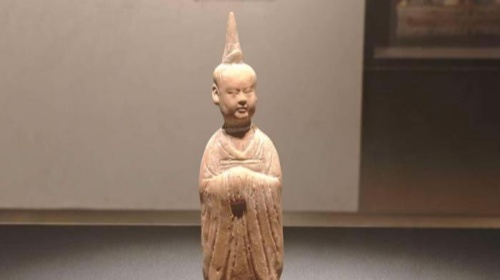
There was the Xia Dynasty, which marked the beginning of the dynasty era. It was not only a milestone in the legendary history, but also a key point for the tribal alliance to move towards an early state. It was of great significance in the formation and development of the diverse and integrated pattern of Chinese civilization. Recently, the special exhibition "China in the Summer Period" was exhibited at the Bronze Branch of Shanxi Museum (Shanxi Bronze Museum). This exhibition gathers more than 250 precious cultural relics from 31 cultural and museum units across the country, presenting multiple archaeological discoveries and cutting-edge research results, and comprehensively sorting out the evolution of Xia culture from its origin, development to maturity. The exhibition progresses through three major units: "Civilization," "Rise of Dynasties," and "Coexistence of China. The first unit focuses on the two prehistoric "giant cities" of Taosi and Shimao, revealing that before the establishment of the Xia Dynasty, the national form and civilized society had gradually matured in the Yellow River Basin, laying a solid foundation for the birth of the dynasty's civilization. The palace and observatory at the Taosi site in Xiangfen, Shanxi, bear witness to the early royal ritual system, with ritual vessels such as dragon plates and drums displaying hierarchical order, and the Zhu Shu flat pot containing clues to the origin of Chinese characters. The special chimes, earth drums, and other artifacts exhibited this time are representative of the ritual and music civilization of the Taosi Temple. On one side of the special bell, there is a pair of drilled holes for hanging. It is currently the oldest discovered stone bell, with a large shape and single piece use, hence it is called the special bell. It is the ancestor of later chimes. The soil drum cavity is made of mud gray pottery, with two sides covered in skin. The belly is nearly olive shaped, with a cylindrical neck connected to it. There are three cylindrical holes in the center and around the bottom of the drum belly. The earthen drum was unearthed from a large tomb and formed a fixed ritual music combination with the drum and stone chimes. The Shenmu Shimao Site in Shaanxi Province is the largest stone built city site in prehistoric China, with a triple wall structure that paved the way for later capital cities. It has special relics such as "storing jade on walls". The exhibited high-grade artifacts such as jade spears and jade teeth enable the audience to appreciate the charm of Shimao jade culture. The "Rise of Dynasties" section takes the audience closer to the Erlitou Site in Yanshi, Henan, known as the "First Royal Capital of China". The grand palace ruins, exquisite bronze and jade ceremonial vessels, and large-scale handicraft workshops showcase the magnificent atmosphere of the glorious summer capital. At the same time, archaeological research achievements such as the Wangchenggang site in Dengfeng, Henan, the Shizhuang granary site in Huaiyang, Henan, and the copper salt remains in southern Shanxi were also showcased, allowing the audience to understand the process of establishing the country and capital during the Xia Dynasty, as well as the tribute system and resource control. The bronze vessel unearthed from the Erlitou site is a key cultural relic of this unit. This is a bronze wine vessel, similar in shape to pottery, characterized by an open mouth, deep belly, and three legs. Copper vessels are often used in conjunction with bronze nobility and are essential ceremonial objects for aristocratic banquets and sacrificial occasions, showcasing their rank and status. The unit of "Huaxia Symbiosis" explains the profound influence of Xia culture. The significance of the Xia Dynasty is not only to create a precedent for hereditary dynasties, but also to establish the paradigm of "diversity and unity" in Chinese civilization. The ritual culture and belief system based on jade and bronze artifacts not only deeply influenced the surrounding areas, but also radiated to the East Asian cultural sphere. Yazhang is an important jade ritual vessel of the Xia Dynasty. Experts believe that the dissemination path of Yazhang, which contains elements of the Erlitou culture, reflects the widespread influence of the Erlitou culture. The exhibition hall presents a group of Yazhang from different regions, among which the Moyu Yazhang unearthed from the Huadizui site in Gongyi, Henan is currently the earliest Xia culture Yazhang seen in the Central Plains region. It has a curved blade at the top, a hole in the handle, and triangular protruding teeth arranged on both sides of the lower end of the body, with several shallow grooves on the tooth surface. It is reported that Erlitou Yazhang has a certain inheritance relationship with it, but there are significant differences in its form. The bronze plaque with inlaid turquoise animal face pattern collected by Tianshui Museum in Gansu Province is a cultural relic from the Xia Dynasty. It is shaped like a tile and has holes at the four corners for threading. The main decoration is animal face pattern, with vivid depictions of animal eyebrows, "chen" characters, etc., and is inlaid with turquoise. These types of artifacts have been unearthed in places such as Erlitou and Sanxingdui, reflecting the exchange between Central Plains culture and surrounding cultures. During the exhibition, Shanxi Museum also held academic seminars, guided learning activities, and other events. It is reported that the exhibition will last until May 10th. (New Society)
Edit:Luoyu Responsible editor:Wang Xiaojing
Source:china.com.cn
Special statement: if the pictures and texts reproduced or quoted on this site infringe your legitimate rights and interests, please contact this site, and this site will correct and delete them in time. For copyright issues and website cooperation, please contact through outlook new era email:lwxsd@liaowanghn.com
 Recommended Reading Change it
















 Home
Home

