“Never assume you’ve reached perfection”
2026-06-26
Not long ago, the launch of Shenzhou-23, a manned spacecraft, was a complete success. Compared to previous launches, the window structure of Shenzhou-23 has undergone upgrades and improvements, enhancing its protection against space debris impacts. This change was prompted by an unexpected incident where Shenzhou-20, a manned spacecraft, was suspected to have been hit by a small piece of space debris. An aerospace worker remarked, “Never assume that you have achieved perfection.” This also serves as a reminder that when preparing for military confrontations and conducting actual combat training, one should never exhibit complacency. Instead, one must thoroughly consider all possible scenarios and take proactive measures.
Military preparedness is the fundamental practical activity of the military and is an essential guarantee for effectively shaping the situation, managing crises, deterring war, and winning battles. War is a realm of uncertainty, and there are no “standard answers” on the battlefield. Military preparedness cannot be absolutely “perfect.” If one believes they have achieved “100%,” it may lead to complacency, a lack of diligence, and a disregard for hidden risks. When unexpected situations arise, one may become flustered and unsure of what to do, with predictable consequences. After World War I, for example, France invested heavily in constructing the Maginot Line in response to the threat of German invasion. However, the war did not unfold as France had anticipated. When the German armored forces bypassed this line and launched a surprise attack, the French were caught off guard and were forced to surrender after just 40 days of resistance.
The battlefield situation in modern warfare is constantly changing, the combat environment is complex and varied, the multidimensional battlefield space is integrated, the forces participating in the conflict are more diverse, the organization and command are more complex, and the requirements for joint coordination are higher. There is an urgent need to continuously explore the rules of winning battles in the midst of change, and to continuously strengthen adaptability in development. “Those who are skilled in warfare prevent chaos before it occurs and prepare for urgency before it arises.” By assuming that the enemy situation is more complex and the difficulties are more severe, and by preparing oneself mentally, physically, and operationally to fight “a battle against the wind,” one can calmly and adeptly handle situations in a brutal, intense, and constantly changing battlefield.
Materialist dialectics teaches us that preparing for the worst scenario is more conducive to achieving the best outcome. There are no invincible generals who have devised every possible strategy in the world; rather, it is by preparing thoroughly and ahead of time for contingencies that one can remain more composed when faced with unexpected situations on the battlefield. In terms of military preparedness, we should enhance our awareness of potential threats, strengthen bottom-line and extreme-scenario thinking, remain vigilant and proactive, fully anticipate difficulties, deeply consider risks, and thoroughly develop response plans. Only by doing so can we effectively enhance the pertinence and effectiveness of military preparedness, thereby being prepared for any eventuality and remaining composed in the face of change.
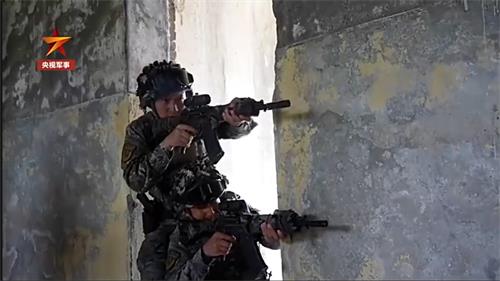
Warfare cannot always be about “hammering a walnut open”; there will be arduous battles, vicious battles, difficult battles, and unexpected battles. Commanders at all levels should clearly recognize that no matter how many contingency plans and preparations are made in peacetime, the situations encountered on the future battlefield will not necessarily unfold exactly as planned according to the contingency plans. Preparation of military capabilities is of utmost importance. Commanders at all levels should adhere to the principle of training the troops based on actual combat needs, rigorously training them in challenging and demanding conditions, focusing heavily on realistic combat training, training in complex environments, and training under extreme conditions, thus cultivating a spirit of bravery that does not fear hardship or death, as well as acquiring robust skills to defeat enemies. Only by thoroughly mastering what is lacking, what is needed on the battlefield, and what the opponent fears, and by responding to uncertainty with certainty, can one firmly grasp the initiative in future battles and remain invincible. (Looking into the New Era)
Edit:Liang Yuhan Responsible editor:Wanzi
Source:81.cn
Special statement: if the pictures and texts reproduced or quoted on this site infringe your legitimate rights and interests, please contact this site, and this site will correct and delete them in time. For copyright issues and website cooperation, please contact through outlook new era email:lwxsd@liaowanghn.com
 Military
 Recommended Reading Change it

























 Home
Home
