China is not the root cause of the problems faced by the European Union, but rather a partner in finding solutions. Deepening cooperation and engaging in equal consultations are the key paths to resolving differences and stabilizing the bilateral trade landscape.
Recently, the first meeting of the China-EU Trade and Investment Consultation Mechanism was held in Brussels. The two sides issued a joint statement, reaching a consensus on the new positioning of their economic and trade relations – namely, as stable and balanced key trading partners for both China and Europe. Against the backdrop of rising protectionism and significant adjustments to the global economic and trade landscape, China and Europe used institutionalized consultations to address each other’s economic and trade concerns, once again demonstrating that deepening cooperation and engaging in equitable consultations are the core approaches for resolving differences and stabilizing the bilateral trade landscape.
The newly established China-EU Trade and Investment Consultation Mechanism comprises four working sub-sections: trade and investment balance, export control, intellectual property, and WTO reform. These sub-sections cover the core concerns of both parties. The two sides have also agreed to establish a joint monitoring mechanism to exchange trade data, monitor trade flows, and conduct related technical work. This series of constructive measures aimed at addressing differences and managing contradictions marks a significant step towards institutionalizing and normalizing the handling of trade disputes between China and the EU. As the German newspaper Handelsblatt has noted, this mechanism provides a stable and feasible path for both sides to resolve their differences through negotiations and prevent the escalation of protectionist measures.
For some time now, protectionist sentiments have been on the rise within the European Union. Some politicians have persistently hyped false claims such as “imbalances in China-EU trade and commerce,” “overcapacity,” and “unfair competition,” and fabricated erroneous narratives like “China Shock 2.0.” They have continuously introduced restrictive economic and trade measures, creating obstacles for normal China-EU economic and trade cooperation. Ultimately, the European side’s actions reveal not only a cognitive bias regarding the China-EU economic and trade relationship but also a sense of powerlessness in addressing its own structural contradictions.
Cognitive biases must be corrected with facts, and structural contradictions require addressing their root causes head-on. Taking the so-called “overcapacity” issue as an example, much of the European side’s allegations are based on a single indicator of trade deficit in goods, while deliberately ignoring the fact of a trade surplus in services. According to Chinese statistics, the EU’s trade surplus in services with China amounted to $48.3 billion in 2025. If trade in services and goods were considered together in a comprehensive assessment, the overall degree of trade imbalance between the two sides would significantly narrow. The development pressures faced by certain European industries stem from their own structural contradictions. High energy costs, fluctuating industrial policies, and insufficient innovation momentum are the core factors hindering their competitiveness. Avoiding competition through protectionist barriers is akin to drinking poison to quench thirst; it only exacerbates structural problems, ultimately undermining European consumers’ well-being and long-term development potential.
The market does not lie. The current structure of trade between China and Europe is largely the result of enterprises’ voluntary choices based on factors such as cost, efficiency, market demand, and supply chain security. According to statistics from the European Automobile Manufacturers’ Association, the sales of Chinese-brand vehicles in Europe reached 138,400 units in May of this year, marking a 65% year-on-year increase. This outcome is fundamentally the product of market choices and reflects the steady improvement of China’s industrial competitiveness. There is no connection whatsoever with the so-called “unfair competition.” Wise individuals in Europe have long pointed out that protective measures such as tariffs will not make Europe stronger but will only delay the transformation and development of local enterprises.
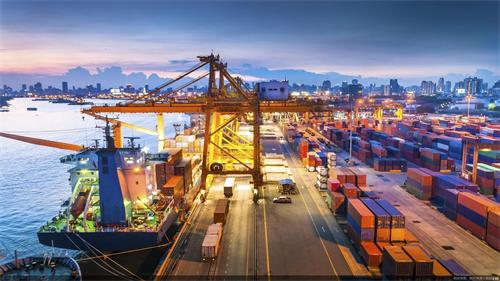
China is not the root cause of the problems faced by the European Union, but rather a partner in finding solutions. Throughout history, China has consistently been willing to use dialogue as a means of resolving differences with the utmost sincerity, while also resolutely safeguarding its legitimate industrial and trade rights. China has repeatedly reiterated that the essence of China-EU economic and trade relations is mutual complementarity and mutual benefit, and that it is entirely possible to achieve dynamic balance in development. China and the European Union are each other’s second-largest trading partners, with bilateral trade in goods reaching $828.1 billion in 2025 and bilateral investment stock exceeding $280 billion. From automobiles and new energy to biopharmaceuticals and machinery, the supply chains and industrial chains of both sides are deeply intertwined and mutually advantageous, with supply and demand markets interdependent. Yu Chi, President of the China-EU Chamber of Commerce, stated that China has long been more than just a profitable market for European enterprises; it is an essential component of the global supply chain. For European enterprises, the key to maintaining competitiveness lies in integrating into global division of labor and cooperation, rather than artificially fragmenting supply chains and industrial chains.
As two of the world’s major powers and markets, the stability of China-EU economic and trade relations holds global significance. Together, China and the European Union account for more than one-third of the world’s total economic output and nearly one-fourth of global bilateral trade, playing a crucial role in driving global economic growth. The cumulative number of trains operated by the China-Europe Express trains has surpassed 130,000, with a total value exceeding $520 billion. These trains serve as a major logistical artery connecting Europe and Asia, as well as a vital support for maintaining the stability of global supply chains and benefiting the livelihoods of people along the routes. Currently, unilateralism and protectionism continue to challenge the international economic and trade order, and the reform of the World Trade Organization is at a critical juncture. In areas such as climate governance, digital trade, and global development, which are vital to the common well-being of humanity, China and the EU share broad common interests and significant opportunities for cooperation.
The consultation mechanism has taken effect, and the real test lies in whether the two sides can work together in the right direction. As comprehensive strategic partners, China and the EU should uphold the principles of mutual respect, equality, and mutual benefit, and promote stable and long-term bilateral economic and trade relations. This will not only benefit the businesses and the well-being of both sides, but also contribute to upholding international fairness and justice, safeguarding the global economic order, and jointly promoting world peace, stability, and prosperity. (Outlook New Era)
Edit:Zeng Mengqi Responsible editor:Li Yi
Source:people.cn
Special statement: if the pictures and texts reproduced or quoted on this site infringe your legitimate rights and interests, please contact this site, and this site will correct and delete them in time. For copyright issues and website cooperation, please contact through outlook new era email:lwxsd@liaowanghn.com
 Recommended Reading Change it













 Home
Home

