A heatwave has swept across the continent this summer, with temperatures in many places breaking through historical extremes. The air conditioner, once considered a "non-essential" appliance in many European households, has suddenly become "hard currency."
During this heat wave, Midea Group's PortaSplit, a mobile split air conditioner developed specifically for the European market, became a phenomenal hit. At one point, the European market sold out, and the second-hand market even appeared at two or three times the official selling price, which at one point soared to 5,000 euros. Some European spenders also spontaneously produced PortaSplit inventory real-time tracking website, just to buy this air conditioner as soon as possible.
On social platforms, many netizens called the PortaSplit "cardbug air conditioner," which does not require perforation, does not need installation, energy efficiency value (SEER) 6.1, low noise operation less than 35 dB, air conditioning refrigerant 1.99 kg. Many of its product features and indicators are accurately "carded" with relevant regulations in France, Germany, Switzerland, Italy, and the United Kingdom.
The so-called "card bug" is not to exploit loopholes, but to study local regulations, building conditions, living methods and user needs to the extreme, and then integrate these details into product design.
Zhao Ali, European product manager of Midea air conditioners, said,“The product development took three years. For example, we strictly control the weight of the external aircraft to 10 kilograms, so as to achieve the lightweight and miniaturization of the external plane. Spending a year or two on a noise reduction scheme; The installation-free scaffold has cumulatively iterated more than 100 times. The product has accumulated more than 300 patents.”
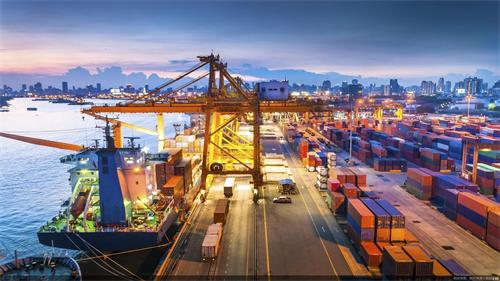
Xiong Xueqin, European Regional Director of Midea Air Conditioners, said that as of June 29, PortaSplit had shipped more than 200 thousand units in 2026, doubling the sales volume of last year. In response to the lack of supplies in Europe, the production end factory has worked overtime. The transport side uses the China-Europe freight train distribution, which has a time limit of 15-25 days, which is about 25 days shorter than the sea transport. After the product arrives in Hong Kong, the local branch will expedite customs clearance and distribute it to the channel terminal as soon as possible.
In fact, PortaSplit is not an accidental product success.
In recent years, Midea has implemented the "Local for Local" strategy overseas. That is, R & D, manufacturing, and talents must be rooted as much as possible in the local area, and local teams will discover the need, relying on the global R & D system to complete product innovation, forming a product system "one place, one solution, one piece" instead of simply copying the products already in the Chinese market.
For example, in North America, in response to the problem that many apartments cannot install traditional heat pumps, Midea has developed window heat pumps that can be used without large-scale building renovations. In West Africa, given that many households rely on diesel generators for power, Midea introduced air conditioners that can adaptation small generators. Summers in the Middle East are often extremely hot, and Midea has developed air conditioners that can continue to operate in extreme temperatures of 70 degrees Celsius.
This summer, Midea, TCL, Haier, Gree, Skyworth, Hisense and other Chinese brands in Europe sales performance is very strong. The relevant person in charge of TCL Industrial Air Conditioning Department introduced that in the second quarter of this year, affected by the continuous high temperature in Europe, TCL air conditioning achieved an overall year-on-year growth of over 27% in the Western European market. Among them, the surge in demand in France and Northern Europe was the most significant, with an increase of more than 300 percent year-on-year, while the Spanish market also achieved a 100 percent year-over-year increase. In the core market of the United Kingdom, France, Germany and other major markets, mobile air conditioners had sold out of all channels as early as the end of June, and terminals had become "rarely available."
Economist Bai Ming believes that this round of Chinese air conditioner sales in Europe is not an accident brought about by "a heat wave," and the sales of air conditioners are not a one-day achievement. He said that Chinese companies have long carried out continuous technology research and development, product layout and channel construction around the European market, and when extreme heat is the new normal, the previous accumulation quickly turns into a competitive advantage.
In Zhao's view, the core competitive advantage of Chinese enterprises going overseas is mainly reflected in two aspects: On the one hand, Chinese enterprises have moved from simple manufacturing output to local innovation and research and development, and can create differentiated products that truly adaptation locally. On the other hand, Chinese manufacturing has strong capacity and rapid responsiveness, which can quickly match the explosive demand of the market.
In this regard, the relevant person in charge of TCL Industrial Air Conditioning Department said that China's perfect production chain and flexible manufacturing system allow enterprises to quickly respond to the surge in orders brought by high temperatures.“TCL fully deployed capacity to reduce the normal production cycle of 30 to 40 days to 10 to 14 days to complete delivery. This 'life and death speed' is difficult for local suppliers overseas.”
It is foreseeable that in the context of global warming, summer heat is gradually becoming the "new normal" in Europe. However, according to foreign media reports, at present only about 20% of households in Europe are equipped with refrigeration equipment such as air conditioning. According to the International Energy Agency, the number of air conditioners in the EU will increase to 275 million units by 2050, more than double the number in 2019, and the European refrigeration market has huge room for growth.
Bai Ming said that in recent years, Chinese enterprises have continuously improved green and low-carbon technologies, product energy efficiency levels and global market layout capabilities, and competitive advantage is shifting from the past to relying more on price and comprehensive competitiveness such as technology, quality, service and brands. This summer's surge in sales of Chinese air conditioners in the European market may be just the beginning. With the continuous deepening of localized research and development, more Chinese refrigeration equipment such as air conditioners, refrigerators and ice makers are expected to continue to enter European homes. (Outlook New Era)
 Recommended Reading Change it











 Home
Home

