Building a “power nation” centered on clean energy is not only an important achievement of Chinese modernization, but also a historic endeavor related to the sustainable development of humanity.
Energy is an essential foundation and driving force for the advancement of human civilization. Since the Industrial Revolution, the large-scale exploitation and utilization of fossil fuels have significantly propelled human civilization’s progress. However, the massive consumption of fossil fuels has resulted in a significant increase in the concentration of greenhouse gases in the atmosphere, exacerbating global climate change and posing severe challenges to the security of global ecosystems. In the face of the real threats posed by climate change, reducing dependence on fossil fuels and accelerating the transition to clean energy have become urgent issues that the international community must address collectively.
China is a staunch advocate of energy transformation. Over the past half-century or more, China has undergone the largest and fastest industrialization process in human history, greatly improving the living standards of its people. While accelerating its industrialization, China has placed environmental protection at an important position and has continued to promote ecological civilization construction, laying a solid foundation in terms of policy and practice for shifting to a development model dominated by clean energy. Today, more and more aspects of daily life are powered by electricity, and China is becoming a “power nation” with clean energy as the mainstay. The significance of this green transformation is comparable to the historic transformation driven by fossil fuels in the Industrial Revolution.
From a supply-side perspective, China has continued to make new breakthroughs in the installation of renewable energy capacity, and its ability to supply clean electricity has steadily increased. By the end of 2025, China’s total installed capacity for renewable energy reached 234 billion kilowatts, accounting for approximately 60% of the country’s total power generation capacity. Of the total electricity consumed by society, nearly 4 units out of every 10 are green electricity. The additional electricity consumed by society is entirely provided by the newly generated power from renewable energy sources. A report released by the Energy and Clean Air Research Center, based in Finland, indicates that with the continued expansion of wind and solar power, China’s renewable energy capacity is projected to reach 3,500 gigawatts by 2030 and 5,000 gigawatts by 2035. By that time, the share of non-fossil fuel power generation is expected to reach around 65%, and the carbon emissions from the power sector are projected to decrease by approximately 30%.
From a consumer perspective, China’s transition to electrification in the transportation sector has been highly effective. By 2025, China’s production and sales of new energy vehicles exceeded 16 million units, maintaining its position as the world leader for 11 consecutive years. The share of new energy vehicles in China’s total new car sales has surpassed 50%. The electrification of freight transportation has also accelerated, with sales of new energy heavy-duty trucks growing rapidly. The electrification of the transportation sector has transformed public travel and logistics methods, continuously shrinking the space for fossil fuels, and providing strong support for the green and low-carbon transformation of the economy and society.
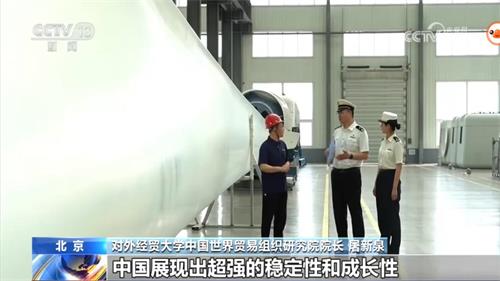
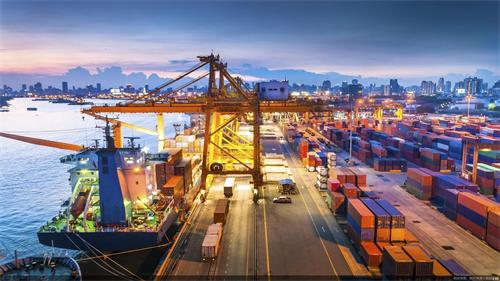
China’s promotion of a green energy transformation has not only significantly altered its own energy structure but has also provided a green impetus for the global energy transition, becoming a crucial driving force in the development of clean energy worldwide. China exports wind power, solar power, and new energy vehicles to over 200 countries and regions globally, supplying 70% of wind power equipment and 80% of solar photovoltaic module equipment worldwide. This has contributed to a decrease of more than 60% and 80% in the costs of wind and solar power generation, respectively. By relying on continuous technological innovation, a comprehensive industrial system, and large-scale manufacturing capabilities, China provides high-quality clean energy products and services to the global market, enabling countries, particularly the developing world, to access clean, reliable, and affordable energy sources, thereby creating favorable conditions for nations to collectively address the challenge of climate change.
Building a “power nation” centered on clean energy is an important achievement of Chinese modernization and a historic endeavor related to human sustainable development. With decades of strategic determination in green development, continuous innovation capabilities, and a resolute commitment to transformation, China’s energy transition will become increasingly solid. This will not only inject lasting green momentum into its own modernization efforts but will also contribute more practical experience to global climate governance and shared development. (Outlook New Era)
(The author is an Australian writer, historian, and social critic.)
Edit:Zeng Mengqi Responsible editor:Li Yi
Source:people.cn
Special statement: if the pictures and texts reproduced or quoted on this site infringe your legitimate rights and interests, please contact this site, and this site will correct and delete them in time. For copyright issues and website cooperation, please contact through outlook new era email:lwxsd@liaowanghn.com
 Recommended Reading Change it
















 Home
Home

