What is the basis for writing the "high score answer sheet" for the national summer grain harvest in 2026?
2026-07-10
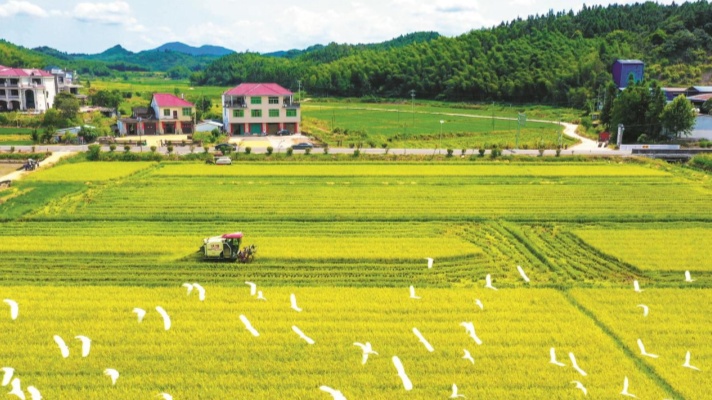
The summer grain production data for 2026 has been released: the total output is 301.49 billion kilograms, an increase of 2 billion kilograms or 0.7% compared to last year. The wheat production was 277.9 billion catties, an increase of 1.57 billion catties or 0.6% compared to last year.
How to write the "high score answer sheet" for the hard won summer grain harvest?
Check the area before the harvest. In 2026, the sowing area of summer grain in China will be 398 million mu, a decrease of 69000 mu from the previous year, maintaining basic stability.
Looking at different regions, among the 25 provinces (regions, cities) with summer grain production, 19 have seen an increase in sowing area, with Anhui, Sichuan, and Hebei increasing by 211000 mu, 137000 mu, and 113000 mu respectively. Some western regions continue to adjust the planting structure of summer and autumn crops, resulting in a decrease in the area of summer grain sowing. Among them, Xinjiang, Gansu, and Yunnan have reduced by 1.176 million mu, 326000 mu, and 144000 mu respectively.
Wei Fenghua, Director of the Rural Department of the National Bureau of Statistics, explained that the basic stability of summer grain planting area lies in the compaction of production responsibilities, active and favorable policy support, and the full sowing of winter wheat.
Wei Fenghua introduced that in recent years, various regions have strictly implemented the joint responsibility of the party and government for food security, strengthened the protection and quality improvement of arable land, promoted the construction of high standard farmland with high quality, and continuously carried out the rectification of "non grain" arable land and the restoration and utilization of abandoned land. Through measures such as increasing the development and utilization of winter fallow fields and optimizing planting structures, the planting area for summer grain has been stabilized.
In addition, the government has strengthened policy support and coordination in terms of prices, subsidies, insurance, etc., stabilized the minimum wheat purchase price and the policy of land fertility protection subsidies, strengthened insurance protection, implemented inter provincial horizontal interest compensation policies for grain production and sales areas, and fully mobilized the enthusiasm of farmers to grow grain and local governments to focus on grain.
As the main variety of summer grain, winter wheat, faced with the unfavorable situation of large-scale delay in sowing due to last year's autumn flood, the central government promptly arranged special funds to support the rush to harvest and sow. Various regions actively carried out the simultaneous promotion of field waterlogging and rush to harvest and sow, implemented anti moisture sowing and late sowing adaptation techniques, and basically achieved the full sowing of winter wheat, laying a solid foundation for summer grain production.
The focus of increasing grain production is on improving the yield per unit area on a large scale. Various regions and departments have taken the large-scale increase in yield as a powerful lever, placing it in a more prominent position, integrating new varieties, technologies, equipment, and models, and vigorously promoting stable and increased grain production and the stable and safe supply of important agricultural products by gathering various resource elements.
Data shows that in 2026, the national summer grain yield will be 757.6 jin/mu, an increase of 6.4 jin/mu or 0.8% compared to the previous year.
By variety, the wheat yield per mu is 805.2 catties, an increase of 6.8 catties, or 0.9%. Among them, the winter wheat yield was 807 jin/mu, an increase of 7.2 jin or 0.9%.
Looking at different regions, Shaanxi, Jiangsu, and Henan experienced a decrease in yield due to drought last year. This year, there has been a recovery in yield, with an increase of 28.4 jin, 11.6 jin, and 6.0 jin per mu, respectively. Shanxi, Hebei, Sichuan, Shandong, and Anhui saw an increase of 10.6 jin, 4.8 jin, 4.4 jin, 3.4 jin, and 3.0 jin per mu, respectively. Hubei experienced a decrease of 4.4 jin per mu due to heavy rainfall.
The steady increase in summer grain yield requires both human efforts and the help of heaven.
Effectively promoting the transformation from weakness to strength. To cope with the widespread late sowing of winter wheat, various regions have generally increased the sowing amount, improved the sowing quality, and ensured sufficient basic seedlings. The central government has allocated funds in advance for the "one spray, three prevention" and pest and disease prevention and control measures, coordinated the allocation of subsidies to promote the transformation from weak to strong, and supported various regions in implementing key technical measures such as shifting fertilizer and water resources and cracking down on hoeing. As a result, the wheat seedling situation has continued to improve.
The overall meteorological conditions are favorable. Although the Huang Huai Hai region and other areas were affected by continuous rainy weather last year, resulting in widespread late sowing of winter wheat, after entering the wintering period, the meteorological conditions in the main wheat producing areas were generally good, with high temperatures, sufficient precipitation, and no large-scale spring droughts or other disasters. The implementation of disease and pest control measures in various regions is conducive to wheat growth and yield formation.
The overall impact of rainfall is controllable. From mid to late May to early June, large-scale rainfall occurred in many areas in the north and south, with heavy rainfall in some areas such as Hubei, and wheat lodging in some plots. Various regions are actively taking remedial and emergency measures to minimize the impact of disasters. The southern region has basically completed the rush harvest before the rainfall, ensuring the summer grain harvest. The timely rainfall in the northern wheat region effectively supplements the soil moisture, which is conducive to the improvement of yield level, especially the significant increase in dryland wheat production.
A season of harvest falls into the bag, a season of hope spreads. In 2026, China will achieve a bountiful harvest of summer grain entering the warehouse, laying a solid foundation for stabilizing annual grain production and providing strong support for responding to complex and severe international situations, promoting economic stability and improvement, and achieving a good start to the 15th Five Year Plan.
Grain production is carried out one crop after another. At present, the summer broadcasting work in various regions has basically ended, and the management of autumn grain fields is progressing steadily. The story of a bountiful harvest is still continuing.
Edit:He Chuanning Responsible editor:Su Suiyue
Source:People's Daily
Special statement: if the pictures and texts reproduced or quoted on this site infringe your legitimate rights and interests, please contact this site, and this site will correct and delete them in time. For copyright issues and website cooperation, please contact through outlook new era email:lwxsd@liaowanghn.com
 Economy
 Recommended Reading Change it


















 Home
Home
