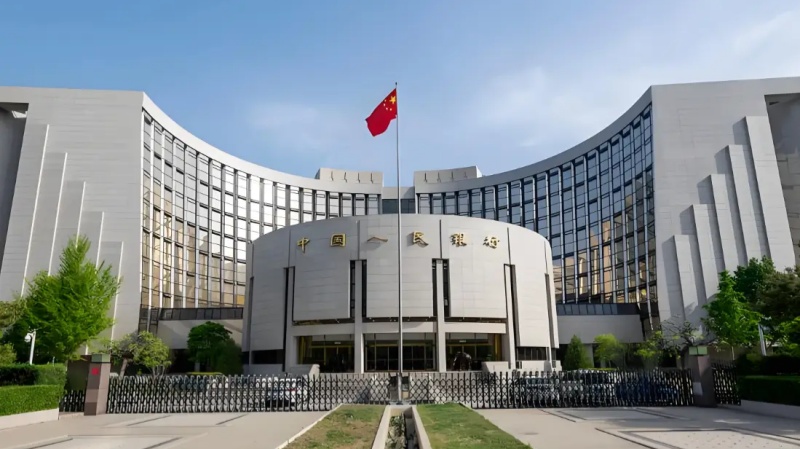
The Monetary Policy Committee (MPC) of the People’s Bank of China (PBOC) recently convened its regular meeting for the second quarter of 2026. The meeting pointed out that China will continue to implement an appropriately accommodative monetary policy, ramp up counter-cyclical and cross-cyclical adjustments, better leverage both the aggregate and structural functions of monetary policy tools, strengthen coordination between monetary and fiscal policies, and foster steady economic growth and a moderate pickup in prices.
The meeting deliberated on core monetary policy orientations for the next stage. It proposed bringing into play the integrated effects of both incremental and existing stock policies, and making monetary policy more forward-looking, flexible and targeted. Authorities will calibrate the intensity, pace and timing of policy implementation in light of domestic and overseas economic and financial conditions as well as financial market performance. The meeting required reasonably ample liquidity to be maintained, ensuring that growth in aggregate financing to the real economy and money supply aligns with the expected targets for economic expansion and overall price levels.
On interest rates, the meeting stressed stronger guidance via central bank policy rates, improvement of the market-based interest rate formation and transmission mechanism, full play of the market interest rate pricing self-regulatory mechanism, and enhanced implementation and supervision of interest rate policies. Authorities will standardize business practices in the credit market, cut intermediate financing charges, and keep overall social financing costs at a low level.
On exchange rates, the meeting clarified that China will boost the resilience of the foreign exchange market, stabilize market expectations, and keep the RMB exchange rate generally stable at a reasonable and balanced level.
Regarding banking institutions, the meeting urged large commercial banks to act as the mainstay in delivering financial services to the real economy, guided small and medium-sized banks to focus on their core businesses, and bolstered banks’ capital strength.
For structural policies, the meeting required full utilization of various structural monetary policy tools and refined management of such instruments. Financial institutions will earnestly advance five key financial priorities and scale up financial support for key areas including domestic demand expansion, technological innovation, and micro, small and medium-sized enterprises (MSMEs). Continuous financial support will be provided to foster the growth and expansion of the private sector.
On the bond market, the meeting called for observing and evaluating bond market performance from a macro-prudential perspective and tracking movements in long-term yields to maintain stable operation of financial markets. China will steadily advance high-standard two-way financial opening-up and enhance capacity for economic and financial governance as well as risk prevention amid greater opening-up.
Dong Ximiao, Chief Economist at China Merchants Union Consumer Finance Co., Ltd., commented that phrases newly added at this meeting, including “making monetary policy more forward-looking, flexible and targeted” and “calibrating the intensity, pace and timing of policy implementation”, highlight refined policy operations within the framework of appropriately accommodative monetary policy.
He predicted that while sustaining ample liquidity and credit expansion, monetary policy will attach greater importance to policy transmission efficiency, financial stability and balance of payments, with forward-looking arrangements rolled out to cope with an increasingly complex domestic and external environment. This signals a shift in macro regulation toward balancing short-term growth stabilization and long-term structural optimization. (Outlook New Era)
Edit:Liu Zhiyu Responsible editor:Li Yulu
Source:https://www.cnstock.com/
Special statement: if the pictures and texts reproduced or quoted on this site infringe your legitimate rights and interests, please contact this site, and this site will correct and delete them in time. For copyright issues and website cooperation, please contact through outlook new era email:lwxsd@liaowanghn.com
 Economy
 Recommended Reading Change it

















 Home
Home
