Collaborative efforts of drones, power boats and bridges - technology equipment sets up rescue lifelines
2026-07-15
Recently, due to the combined impact of Typhoon "Meisak" and reservoir hazards, Guigang City in Guangxi Province has suffered severe waterlogging, with all roads blocked and several campuses turned into "islands", trapping about 30000 teachers and students. At the critical moment, a three-dimensional rescue led by technological equipment quickly unfolded, from emergency supplies delivery to safe transfer of all personnel. Technological equipment such as drones and power boats and bridges worked together to build a rescue "lifeline" in the flood.
In the past, people carried on their shoulders, waded into water for search and rescue, and conducted door-to-door inspections. Emergency rescue and relief efforts were a concerted effort, facing many situations of "not being able to see clearly, not being able to reach, and not being able to do it in time"; Nowadays, in addition to manpower investment, "computing power" has become a "hardcore force" that runs through the entire process of disaster prevention and early warning, emergency rescue, and post disaster repair. Drones are replacing human labor in breaking into the most dangerous disaster areas, power boats and bridges carry hundreds of people across floods, AI and satellite remote sensing are turning "finding a needle in a haystack" into precise rescue, and technology is breaking down the barriers to rescue in the past one by one.
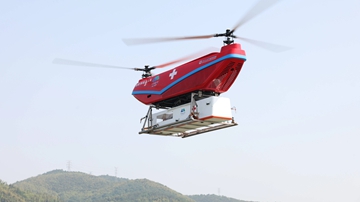
Guangxi Beitou Low altitude Company has invested in logistics drones, search and rescue drones, and agricultural crop protection aircraft to undertake multiple tasks such as material delivery, disaster investigation, and personnel search and rescue. The on-site signal is extremely unstable, and the drone flight radius can only reach about 2 kilometers. The two devices can be extended to 3 kilometers in dual-mode. "Li Ge, Product Manager of the Low altitude Flight Drone Scenario Division of Guangxi Beitou Low altitude Company, and his team are mainly responsible for delivering supplies to trapped students in Xijiang Education Park in Guigang. In the past two days, four medium-sized drones have continuously delivered more than 12 tons of daily necessities.
At the same time, the problem of nighttime search and rescue has also been easily solved by drone technology. After nightfall, the visibility of the survey was insufficient, and the efficiency of manual search and rescue was greatly reduced. Several drones carrying infrared thermal imaging equipment, high-power searchlights, and shouting devices once again entered the disaster stricken area. Guigang Postal E-commerce Logistics Park had on duty personnel and postal truck drivers trapped. The rescue team searched and rescued them multiple times without success, and finally found the trapped person on the rooftop of the park through continuous drone calls. Zhang Hongxing, Deputy Director of the Investment and Development Department of Guangxi Beitou Low altitude Economic Investment Co., Ltd., stated that the installation of thermal imaging equipment on drones has significantly improved the efficiency and accuracy of night search and rescue. The significance of human-machine complementarity is to use technology to liberate people from the most dangerous and time-consuming aspects, leaving time for decisions that require more manual judgment.
The air passage has solved the urgent problem, but to complete the large-scale transfer of thousands of people, stronger water transportation capabilities are still needed. The assault boat is maneuverable and flexible, but can only transport about 10 people at a time, and its efficiency is far from meeting the demand. At this time, the power boat bridge becomes the core equipment for large-scale transfer.
The Chinese Aneng rescue team transported the powered pontoon bridge, known as the "rescue aircraft carrier" on the water, from the carrier vehicle into the water and quickly unfolded it into a 60 meter long surface platform. The boat bridge is self powered and can carry 500 people at a time. It can also be assembled with multiple sections, effectively solving the problem of limited transport capacity and difficulty in transporting heavy daily necessities for ordinary assault boats, and greatly improving the transfer efficiency of trapped personnel. The campus passage is limited, there are many floating objects on the water surface, and the underwater terrain is complex. The rescue team chose to connect the six boat bridges in pairs. Three pontoon bridges steadily carry teachers and students, shuttling back and forth between the dormitory building and the safe zone. In just 11 hours, the rescue team successfully transferred over 6000 trapped teachers and students. At around 12:30 pm on July 9th, with the last group of teachers and students boarding the boat bridge, more than 8000 teachers and students from schools such as Guangxi Logistics Vocational and Technical College were safely rescued.
Personnel evacuation is not the end point of disaster relief, post disaster assessment and infrastructure repair are the "second half" of emergency rescue. The new "mother child" intelligent drainage rescue vehicle has a pumping capacity of 3000 cubic meters per hour, equipped with leakage protection and remote monitoring system, greatly improving the efficiency of flood rescue; The integrated network of "satellite communication command vehicle+Ka portable mobile satellite base station" can transmit disaster detection videos in real time, quickly generate a "panoramic map of power repair", accurately coordinate materials and manpower, and effectively solve the rescue problem of "unable to see the scene and transmit instructions" in flood disasters; The AI researcher of "Yuli", the intelligent agent of "Xunjie", and satellite remote sensing disaster detection technology have connected the entire chain of pre disaster warning, real-time analysis, front-line disposal, and post disaster review. By leveraging the integrated monitoring system of "sky and earth", Southern Power Grid Guangxi Power Grid Company has shifted from passive response to active perception in power rescue, providing a "thousand mile eye" and "smart brain" for post disaster power restoration.
When the "Eye of Heaven" helps people explore and "computing power" assists people in decision-making, technology changes far beyond the equipment itself, but allows machines to undertake the most dangerous and time-consuming links, snatching more judgment and scheduling time for rescue personnel, and quickly connecting the "lifeline" of rescue. (Looking into the New Era)
Edit:He Chuanning Responsible editor:Su Suiyue
Source:ECONOMIC DAILY
Special statement: if the pictures and texts reproduced or quoted on this site infringe your legitimate rights and interests, please contact this site, and this site will correct and delete them in time. For copyright issues and website cooperation, please contact through outlook new era email:lwxsd@liaowanghn.com
 Sci-Tech
 Recommended Reading Change it








 Home
Home
