The landing pace of intelligent mobile phones is accelerating
2026-07-15
On July 13th, Shanghai Jieyue Xingchen Intelligent Technology Co., Ltd. (hereinafter referred to as "Jieyue Xingchen") officially released the Step AOS intelligent agent operating system and STEPX Neo intelligent agent mobile phone. Prior to this, on July 8th, Ni Fei, Senior Vice President and President of ZTE's Terminal Business Unit, as well as President of Nubia Technologies Co., Ltd., announced on social media that Nubia's flagship smartphone positioning and mass production model is scheduled to make its first public appearance at the 2026 World Artificial Intelligence Conference (WAIC).
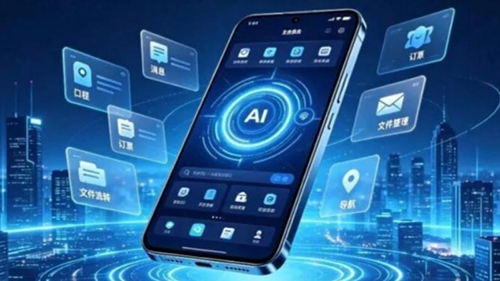
At present, intelligent smartphones with autonomous execution and cross application collaboration capabilities are becoming one of the most important hardware carriers for AI technology to penetrate the consumer market, and the pace of product landing continues to accelerate. An industry analyst told Securities Daily reporters that the industry is gradually connecting the complete chain from technology verification, product optimization to large-scale listing.
Enterprise accelerates layout
Smartphones and other end terminals are key breakthroughs in promoting the large-scale popularization of large-scale models, and mobile phone manufacturers and technology companies are accelerating their layout in this field.
The news that Nubia will launch a smartphone has attracted widespread attention in the market. Looking back, Nubia once launched the AI mobile phone engineering model with the big model of Doubao in conjunction with ByteDance. This product is the first to achieve system level intelligent operation, relying on large models to complete cross application task linkage, and belongs to the pilot product that explores end-to-end intelligent agents earlier in the industry. Due to the limited technological maturity and application ecosystem at that time, this model was only tested on a small scale and could not be pushed to the mass market. However, it accumulated valuable practical experience for the entire industry, such as end-to-end model adaptation and system permission scheduling.
The STEPX Neo smartphone launched by Step Star is equipped with the native Step AOS operating system designed for intelligent agents, and is built with the new generation of personal intelligent agent "Step Amoo", focusing on building an integrated end-to-end AI terminal that combines "model, software, and hardware".
It is understood that Step AOS re plans the allocation of computing resources, data structures, service scheduling, security framework, and human-machine interaction logic around the operational requirements of intelligent agents, with the goal of promoting the transformation of interaction modes.
Traditional systems aim to increase user operation time and enhance user retention, while native systems of intelligent agents strive to minimize user attention consumption. Users only need to make demands, and intelligent agents autonomously schedule various services and complete tasks in a closed loop, with a focus on ensuring efficient and reliable task implementation
The industry analysts mentioned above stated that multiple products have emerged one after another, which intuitively reflects the significant acceleration of the landing pace of domestic intelligent mobile phones.
End side intelligent agents welcome the development window period
It is not accidental that intelligent mobile phones have received widespread attention, relying on two major industry foundations: firstly, the continuous iteration of domestic large-scale model capabilities, and the increasingly mature lightweight end side models; Secondly, the computing power of mobile NPUs (Neural Network Processing Units) continues to upgrade, and the hardware foundation of smartphones can now support the permanent operation of intelligent agent programs, creating hardware prerequisites for active and automated AI interaction.
At the same time, changes in consumer demand are forcing terminal manufacturers to innovate and upgrade. The current mainstream smartphones' built-in AI is mostly limited to passive Q&A and single point function services, making it difficult to meet users' demands for continuous multitasking and cross application operations. Consumers' demand for intelligent terminal experiences with autonomous execution capabilities is constantly increasing.
The trend of the industrial chain confirms the growth potential of the track. In the past two years, the penetration rate of end-to-end AI terminals has continued to rise, and intelligent agent capabilities have gradually become the core selling point of mid to high end smartphones. The latest GenAI smartphone market forecast report released by Counterpoint Research shows that by 2026, the proportion of smartphone shipments with generative AI capabilities is expected to reach 45% of global smartphone shipments, a significant increase from the 36% level in 2025.
It should be noted that the industry as a whole is still in the early stages of development, and the widespread adoption of intelligent smartphones still faces multiple practical constraints. Zhang Yi, CEO of Guangzhou AiMedia Shuju Information Consulting Co., Ltd., analyzed to Securities Daily reporters that at present, the vast majority of mobile apps are developed based on traditional interactive logic, and the industry has not yet formed a unified intelligent agent calling standard. Cross application automation operations generally encounter problems such as insufficient interface adaptation and system permission constraints, which limit the full potential of intelligent agents.
In addition, continuous reasoning and multitasking parallel operation will increase the requirements of intelligent agents for terminal computing power, memory, and power consumption. Upgrading hardware specifications is likely to drive up the overall cost of the machine. How to balance the user experience, battery life, power consumption, and terminal price is a difficult problem that the entire industry needs to solve, "Zhang Yi added.
It is widely believed in the industry that 2026 will be a crucial year for the pre commercialization of smartphones. With the continuous optimization of the underlying operating system, the release of mass-produced terminals, and the coordinated improvement of upstream and downstream ecosystems, intelligent agent functions are expected to gradually become a normalized configuration for smartphones. In the medium to long term, as costs continue to decline, end-to-end intelligent agents will continue to open up space for consumer electronics transformation and upgrading, becoming an important incremental track for the landing of the artificial intelligence industry. (Looking into the New Era)
Edit:He Chuanning Responsible editor:Su Suiyue
Source:Securities Daily
Special statement: if the pictures and texts reproduced or quoted on this site infringe your legitimate rights and interests, please contact this site, and this site will correct and delete them in time. For copyright issues and website cooperation, please contact through outlook new era email:lwxsd@liaowanghn.com
 Sci-Tech
 Recommended Reading Change it

















 Home
Home
