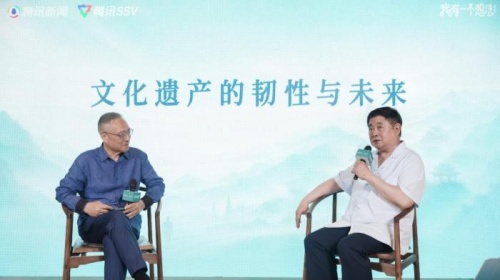
The 10th Anniversary Exchange Event for the Successful UNESCO World Heritage Status of the Zuojiang Huashan Rock Art Cultural Landscape was held in Chongzuo, Guangxi on the 15th. Experts in cultural heritage from China and abroad shared experiences on world heritage conservation, cultural tourism development, and inclusive livelihood improvement, exploring sustainable pathways for world heritage preservation.
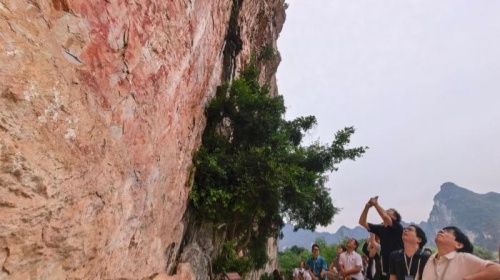
The Zuojiang Huashan Rock Art Cultural Landscape, dating back over 2,000 years, is located on the eastern bank of the Ming River in Ningming County, Chongzuo City, Guangxi. It features more than a thousand images of figures, animals, and utensils painted in ochre by the ancient Zhuang people, the Louyue tribe, documenting their social activities. In 2016, this rock art site was officially inscribed on the UNESCO World Heritage List, marking China's first rock art cultural heritage site.
Benjamin Smith, Chair of the International Scientific Committee on Rock Art of the International Council on Monuments and Sites, pointed out that stable rock formations are a prerequisite for the long-term preservation of rock art. This conservation work requires high professional expertise, and there is a global shortage of top-tier practitioners. Cross-border collaborative training can be promoted to integrate cutting-edge global research achievements and continuously improve internationally recognized rock art conservation standards. Meanwhile, all artificial preservation measures must be implemented with caution to prevent secondary damage to prehistoric murals during restoration work.
Faisal Abdul Rahman, Chairman of the International Council on Monuments and Sites Malaysia Committee, discussed the cave art conservation experience in Malaysia. He mentioned that Malaysia integrates indigenous rights into the global heritage governance system, involves local communities in daily conservation efforts, coordinates the needs of multiple stakeholders, and simultaneously assesses the potential risks posed by climate change to heritage preservation.
Li You, Party Committee Secretary of the China Cultural Heritage Research Institute, stated, "We have always adhered to the principle of protection as the premise, promoting a positive interaction between cultural heritage conservation and local economic and social development as well as improvements in people's livelihoods, all while strictly safeguarding the heritage itself and its surrounding environment."
Li You stated that the research institute will continue to deepen cooperation with ASEAN countries and international academic organizations in areas such as collaborative heritage conservation, academic research discussions, core technology sharing, and professional talent cultivation, while disseminating China's rock art conservation techniques and scientific research experience.
Bu Guoxiong, Director of the Guangxi Huashan Scenic Area Management Committee in Chongzuo City, stated that the next step involves implementing key projects such as preventive conservation and digital cultural heritage initiatives. Chongzuo plans to establish a China-ASEAN Rock Art Exchange Center, leveraging multilateral cultural cooperation platforms to enhance the international recognition of the Huashan rock art. Through cross-cultural exchanges, the city will continue refining a world heritage development model that combines local characteristics with global reference value. (Looking Forward to the New Era)
Edit:Sun Kenan Responsible editor:Chen Jie
Source:chinanews.com.cn
Special statement: if the pictures and texts reproduced or quoted on this site infringe your legitimate rights and interests, please contact this site, and this site will correct and delete them in time. For copyright issues and website cooperation, please contact through outlook new era email:lwxsd@liaowanghn.com
 Recommended Reading Change it











 Home
Home

