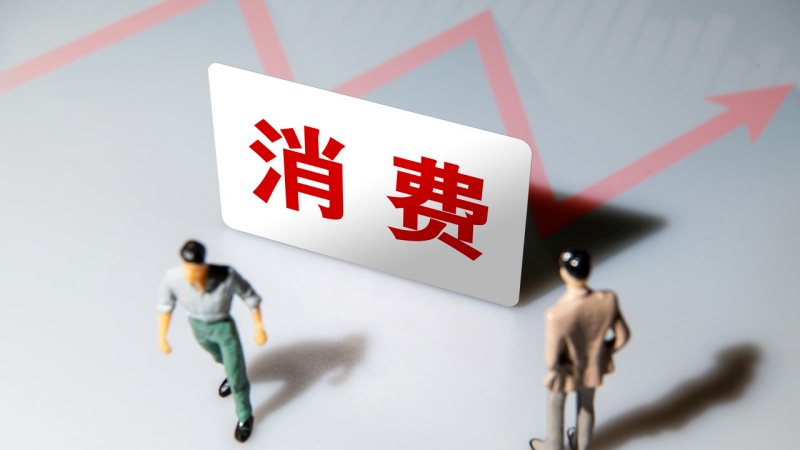
Top-Down Roadmap Unveiled for Boosting Consumption Over Next Five Years. On July 13, official information from the Chinese Government Website revealed that the State Council has recently approved the Plan for Expanding Consumption During the 15th Five-Year Plan Period (hereinafter referred to as the Plan), laying out 28 key tasks and initiatives to expand consumption in the 15th Five-Year Plan period. The Plan sets targets for 2030: sustained expansion of the overall consumer market, a notable rise in the household consumption rate, robust growth in nationwide spending on goods and services, total retail sales of consumer goods reaching roughly 60 trillion yuan, and a stronger role of consumption as a driving force for economic growth.
Wan Zhe, Professor and Economics Expert at Beijing Normal University, told reporters from the National Business Daily in a phone interview that the national target of 60 trillion yuan in total retail sales of consumer goods is formulated against the backdrop of domestic demand serving as the main growth engine over the next five years. This fully demonstrates that consumption will remain the ballast of economic growth during the 15th Five-Year Plan period, and China still boasts enormous room for consumption expansion.
Boost Quality and Accessibility of Service Consumption
Notably, “boosting quality and accessibility of service consumption” takes a prominent position in the Plan.
In terms of improving daily service consumption, the Plan calls for launching initiatives to upgrade and popularize service consumption, and rolling out consumption promotion campaigns covering key sectors. Authorities will upgrade catering services, urge business operators to fully fulfill their primary responsibility for food safety, carry out regional catering brand cultivation programs, and encourage local governments to build food clusters and industrial hubs for distinctive snacks. The Plan also promotes high-quality development of the hospitality sector by fostering a batch of premium branded hotels and boutique homestays. It will expand supply of high-quality domestic services, upgrade vocational skills for domestic workers, refine national standards for domestic service industries, and cultivate leading enterprises and well-known brands in the sector.
To expand elderly consumption, the Plan speeds up the development of a three-tier elderly care service network covering counties, towns and villages. It optimizes an elderly care system centered on home-based care, supported by community services and professional institutional care integrated with medical treatment, and improves care services for disabled and dementia-stricken seniors. Social forces will be encouraged to scale up inclusive elderly care supply, and high-quality development of the silver economy will be advanced. Special programs will be rolled out to upgrade county-level elderly care services. Technology will be harnessed to advance digital and intelligent transformation of elderly care services. Vacant venues will be renovated and expanded into elderly care institutions in accordance with laws and regulations. The country will accelerate vocational skill grading for elderly care practitioners and establish a formal vocational qualification system for senior care workers.
On cultural and tourism consumption, the Plan aims to expand high-quality supply of cultural and tourism products and deepen integrated development models of “culture-tourism plus all industries” and “all industries plus culture-tourism”. It launches campaigns to improve public cultural services, with user-friendly measures such as staggered and extended opening hours for museums and cultural venues. Authorities will enrich performing arts products to amplify their consumption-driven effects, roll out more high-quality films and television works, and lift the quality of online literature and online audio-visual content. New cultural business formats will be fostered, including animation, cultural and creative products, and intangible cultural heritage brands, alongside digital art and national trend cultural creations.
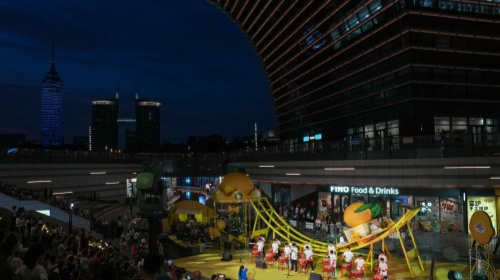
For high-quality tourism development, the Plan supports the creation of premium travel routes and top-tier tourist destinations, and diversifies distinctive tourism products such as cruise and yacht trips, RV camping, industrial tourism and study tours. It promotes the nighttime cultural and tourism economy by hosting lantern fairs, light shows, river night cruises and other events tailored to local conditions. Transport services will be upgraded with more special tourist trains put into operation.
Zhang Jianping, Deputy Director of the Academic Committee at the Chinese Academy of International Trade and Economic Cooperation, shared written comments with the National Business Daily. He noted that service consumption still accounts for a relatively low share of overall consumption yet grows far faster than goods consumption, reflecting strong market demand. Both producer services and consumer services hold untapped market potential, and the growth of service consumption will play a vital role in optimizing China’s consumption structure and nurturing new growth drivers.
Wan Zhe added that service consumption was once a supplementary component of China’s consumption structure but has now become the primary engine of consumption growth. In 2025, per capita spending on services made up 46.1% of total per capita household consumption, nearly half of all household spending. China’s consumption structure has completed a pivotal shift from goods-dominated growth to dual-driven growth by both goods and services, and will gradually transition toward service-led consumption in the years ahead.
Expand and Upgrade Goods Consumption
The Plan also highlights efforts to expand and upgrade goods consumption.
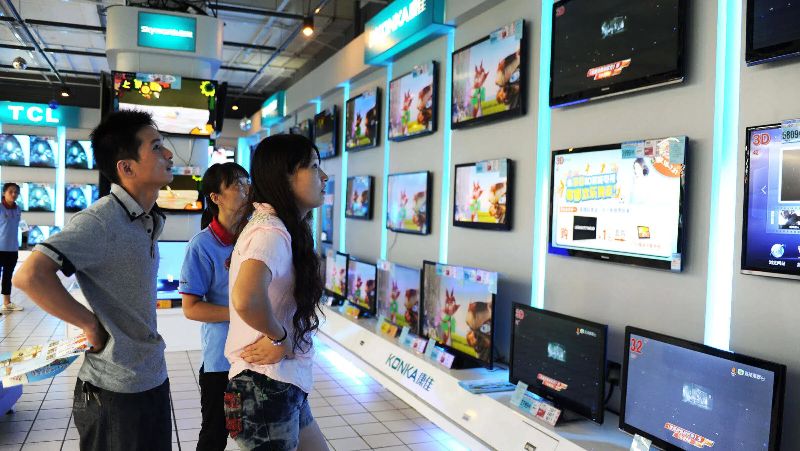
To boost consumption of large durable goods, the Plan expands automobile consumption through full-chain innovation in automobile circulation and consumption. It facilitates used-car trading and expands post-market consumption including auto modification, vehicle leasing, motor sports and RV camping. Intelligent upgrading of home appliances and furniture will be supported; a new generation of smart terminals will be developed to enable interconnection of smart home devices and drive the shift from single-product intelligence to whole-house smart ecosystems.
Special Column 6 of the Plan specifies full-chain measures to stimulate automobile consumption. Authorities will support new vehicle racing events for new energy vehicles and intelligent connected vehicles to advance research, manufacturing and real-world application through competitions. High-standard, distinctive premium motor sports events will be planned, mass motor sports activities promoted, national professional motor sports events upgraded to build renowned domestic racing brands, and high-level international motor sports competitions held in an orderly manner.
“Auto racing events can break the ceiling of automobile consumption and extend the industrial chain,” Wan Zhe told the National Business Daily. At present, China’s auto consumption mainly covers new car purchases and used-car trading, while automotive cultural consumption remains underdeveloped. Robust development of the motor sports economy will drive coordinated expansion of diverse industries including auto modification, event operation and race track construction, thus lengthening the entire automobile consumption industrial chain.
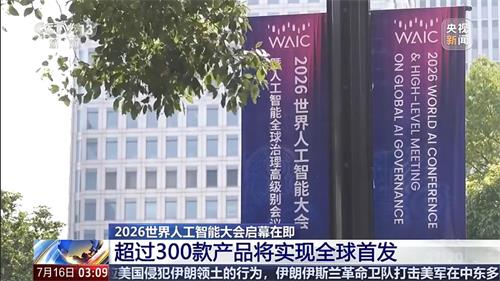
Furthermore, the Plan prioritizes deep integration of “AI plus consumption”.
It calls for high-quality development of digital consumption through a dedicated digital consumption upgrading initiative. Supply of next-generation intelligent terminals will be expanded, including AI smartphones, laptops, smart wearable devices, intelligent robots and desktop 3D printing equipment. R&D and interconnection of smart security and video home care systems will be accelerated, alongside pilot trials for the market access and road operation of intelligent connected vehicles.
Digital service consumption will be elevated by leveraging artificial intelligence, virtual reality and other technologies to upgrade daily services, scenic spots and commercial blocks. AI will be integrated with education, healthcare, culture, tourism, sports and other sectors to expand application scenarios for AI agents. New forms of digital content consumption will be cultivated, including high-quality digital cultural museum products, ultra-high-definition radio, television and online audio-visual content, VR films and LED digital cinemas.
Special Column 8 of the Plan states that leading enterprises along industrial chains will be supported to build collaborative innovation platforms, driving closer coordination between upstream and downstream partners. New models such as financial leasing and shared trial use for AI products will be explored to boost market adoption.
Zhang Jianping commented to the National Business Daily that artificial intelligence will play an increasingly prominent leading role in consumption in the future. The integration of AI and consumption enables AI technology to penetrate every link of goods and service consumption. It can improve cost performance for consumers, boost consumption efficiency, and foster a wealth of new consumption scenarios and business formats. (Outlook New Era)
Edit:Liu Zhiyu Responsible editor:Li Yulu
Source:https://www.nbd.com.cn/
Special statement: if the pictures and texts reproduced or quoted on this site infringe your legitimate rights and interests, please contact this site, and this site will correct and delete them in time. For copyright issues and website cooperation, please contact through outlook new era email:lwxsd@liaowanghn.com
 Economy
 Recommended Reading Change it














 Home
Home
