Chinese vocational education contributes to Malaysia’s industrial transformation and upgrading.
2026-07-16
China and Malaysia are friendly neighbors separated by the sea. The traditional friendship between the two countries has spanned thousands of years. In recent years, economic and trade, industrial, and cultural exchanges between China and Malaysia have continued to deepen and solidify. In particular, cooperation in technical vocational education between the two countries has taken root and flourished, yielding fruitful results. “Vocational education cooperation serves to upgrade regional industries and build a new bridge for Malaysia-China exchanges,” Li Chengxiao, Malaysian Special Envoy for Technical Vocational Education, told a People’s Daily interview recently.
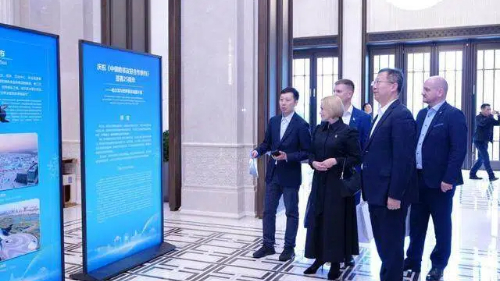
The Malaysian government highly recognizes the empowering role of technical vocational education in bolstering bilateral relations between Malaysia and China. It has appointed Li Chengxiao to oversee the overall advancement of relevant cooperation between the two countries and establish a regular platform for exchange and collaboration. Li Chengxiao has been deeply involved in the field of educational exchanges for many years. Since taking on his new role as special envoy, he has visited numerous locations, including Beijing, Chongqing, Shenzhen, Yangzhou, and Harbin, and has continued to promote the implementation of numerous training programs and industry-education cooperation projects.
Li Cunjiao stated that according to statistics, between 2024 and 2025, Malaysia had dispatched over 5,000 official training missions to China for study purposes. In addition to these, there were numerous civilian training teams, with training periods ranging from as short as ten days to as long as two years. “Currently, a large number of Chinese-funded enterprises are setting up operations in Malaysia to develop high-tech industries. The existing local education and training systems are unable to meet the needs of technical talent for these enterprises. The two governments are jointly establishing youth technical vocational education and training programs to serve various market entities, balancing the development of manufacturing and high-tech industries with the social and livelihood needs of Malaysia.” Li Cunjiao believes that the large number of Malaysian students traveling to China for training represents recognition of China’s vocational education, fosters deeper cultural exchanges between Malaysia and China, and contributes to the establishment of a new, people-centered regional economic development framework.
The aging of the population is a challenge that both China and Malaysia face together. Li Cunxiao believes that training in healthcare and caregiving is a landmark cooperative project between the two countries, which has been impressive. He stated that Malaysian young students have traveled to vocational schools in Liaoning Province to systematically study specialized courses such as care for cognitively impaired elderly individuals, interventions for dementia, and wound management. After observing and participating in practical instruction, the students were deeply impressed. “The comprehensive training facilities and mature standardized training systems in China are precisely what Malaysia’s local industry urgently needs to fill the gaps in its development,” Li Cunxiao said. Upon returning home from their studies, the students not only brought back professional skills but also independently established local training institutions, faithfully replicating the established teaching methods and thus improving Malaysia’s vocational education ecosystem for healthcare and care technology.
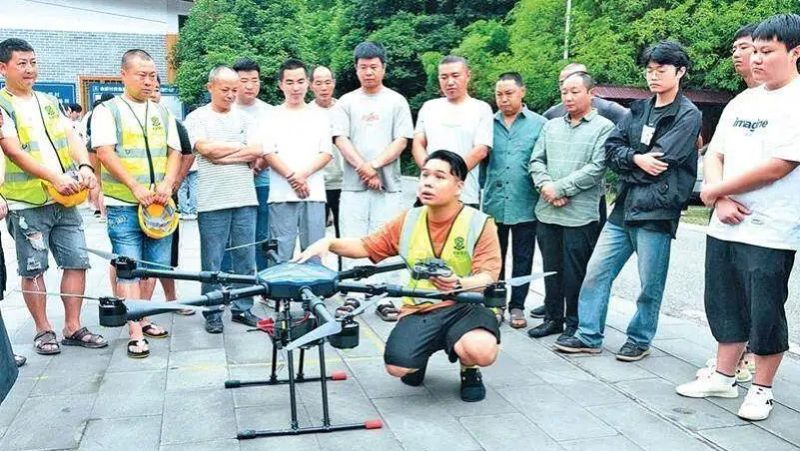
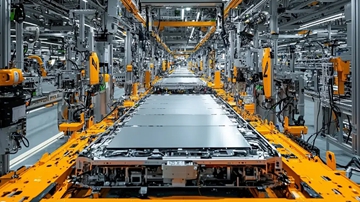
Li Cunxiao believes that Malaysia and China have established three key areas of cooperation in the field of technical vocational education. The first is the cultivation of talent in the field of new energy vehicles. The state of Perlis in Malaysia is actively developing the ASEAN New Energy Vehicle Industrial Base. Malaysian local brand Proton is collaborating closely with Chinese enterprises, resulting in the creation of numerous technical positions. Through the China-Malaysia Youth Technical and Vocational Training Program, over 600 students and professional instructors have completed comprehensive training, thus continuously supplying skilled professionals to the local new energy industry.
The second area is cooperation in specialized talent for railway operation and maintenance. Under the overall coordination of the Malaysian Minister of Transport, 200 Malaysian students traveled to Liuzhou Railway Vocational and Technical College for professional training. Upon completing their studies, they will be deployed to the front lines of railway operations on the Malaysian East Coast, working in technical positions such as train driving and track maintenance. The two sides have finalized a plan for subsequent cooperation, which includes arranging Chinese instructors to teach in Malaysia and exploring the possibility of establishing joint railway vocational training branches to continuously cultivate talent in rail transportation.
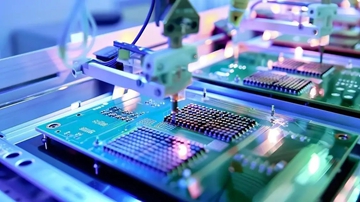
The third aspect is the cultivation of diverse talents across the entire industry. The scope of cooperation includes sectors such as chip semiconductors and construction infrastructure. Li Cunxiao believes that China possesses a well-established vocational education system, mature technical standards, and strong industrial support capabilities, making it well-equipped to meet Malaysia’s talent needs on a deep level.
Li Cunxiao stated that Malaysia has 1,398 technical and vocational schools, but it still struggles to keep pace with the global trend of digitalization and intelligence. By leveraging independent secondary school platforms to introduce China’s well-established teaching curricula and professional instructors, it is possible to rapidly expand the local pool of technical talent. “Last year, several independent secondary schools in Kuala Lumpur took the lead in initiating pilot programs, collaborating with Chinese machinery manufacturing enterprises to introduce artificial intelligence training classrooms and comprehensive training hardware. This enabled the integration of intelligent machinery specialty courses into the daily teaching of independent secondary schools, thereby bridging the gap between Chinese basic education and vocational skill training.”
Regarding the vision for long-term development, Li Cunxiao expressed his hope that China and Malaysia, relying on vocational education as a pragmatic cooperation link, would continue to deepen industrial synergy and cultural exchange, thereby creating a replicable and scalable model of bilateral friendship for the region’s new economy and geopolitical cooperation. (Outlook New Era)
Edit:Zeng Mengqi Responsible editor:Li Yi
Source:people.cn
Special statement: if the pictures and texts reproduced or quoted on this site infringe your legitimate rights and interests, please contact this site, and this site will correct and delete them in time. For copyright issues and website cooperation, please contact through outlook new era email:lwxsd@liaowanghn.com
 Recommended Reading Change it












 Home
Home

