2026-10-30
The cultivation of trustworthy consumer entities adheres to the core principle of self commitment by operators, and does not adopt administrative orders to enforce it. It highlights a positive incentive orientation, allowing trustworthy and committed operators to truly obtain market dividends, achieving a win-win situation where operators benefit, consumers purchase with confidence, and the market becomes more dynamic.
Consumption is the ultimate demand and the enduring driving force of economic growth. Don't worry about consumption, it is connected to both the well-being of the people and the overall development. To continuously optimize the consumer ecology, boost consumer confidence, and unleash consumer vitality. Recently, the State Administration for Market Regulation issued a notice on the comprehensive cultivation of trustworthy consumption units and clusters (hereinafter referred to as the "Notice"), fully launching the cultivation of trustworthy consumption entities.
The Notice specifies that by 2030, there will be over 5000 trusted consumption clusters in China, with a wide coverage of trusted consumption units in key areas. The brand of "Trusted Consumption in China" will be basically formed, and consumers' sense of gain will be significantly enhanced.
Promote the advancement of consumer environment governance
At present, the people's expectations for a quality life and safe consumption are increasing, but there are still pain points and blockages in some areas such as supply shortages, frequent disputes, and non-standard operations. It is urgent to work from the supply side of operators to promote the advancement of the consumption environment governance.
Previously, the State Administration for Market Regulation had taken the lead in implementing a three-year action plan to optimize the consumption environment, insisting on cultivating trustworthy consumer entities as an important lever for transforming regulatory models and improving regulatory efficiency.
It is reported that since 2025, the State Administration for Market Regulation has organized 10 cities to carry out pilot projects, guiding various regions to actively cultivate a large number of trustworthy stores, trustworthy catering, trustworthy business districts, etc. Practice in multiple regions has proven that cultivating trustworthy consumer entities can effectively improve consumer quality, boost consumer confidence, and promote consumption expansion and upgrading.
Wang Huowang, Director of the Enforcement and Inspection Bureau of the State Administration for Market Regulation, introduced, "It is precisely because we have seen these achievements that we have decided to carry out the cultivation of trustworthy consumer entities nationwide, use 'small incisions' to drive the' great improvement 'of the consumption environment, and promote the transformation of the governance of the consumption environment from' post event rights protection 'to' pre event prevention ', and from' government led 'to' social co governance '
Innovatively cultivating trustworthy consumer entities "is an important work measure deployed in the" 15th Five Year Plan for Expanding Consumption ". To this end, the" Notice "starts from three key points:
Capture the two types of entities: "units" and "clusters". The 'reassuring consumption unit' specifically refers to a single operator that directly faces consumers. Cultivating trustworthy consumer units means starting from the stores and operators that the masses often come into contact with, guiding them to consciously maintain good integrity, starting from the most basic compliance commitments, gradually expanding the commitment content, and creating brand characteristics. The 'Anxin Consumption Agglomeration Zone' specifically refers to consumption concentration areas such as commercial districts, markets, scenic spots, and neighborhoods. The cultivation is not only aimed at businesses within the region, but also at pushing the regional operation and management to the forefront, fully exerting their leading and overall role, focusing on improving the unified service standards and rights protection mechanisms of the region, coordinating and promoting the overall creation of consumption scenes, and promoting the systematic iteration and upgrading of the regional consumption environment.
Grasp the core measure of "self commitment". The cultivation work includes mobilization and guidance, independent commitment, verification and publicity, and coding and labeling. Among them, self commitment is the top priority in the cultivation work. We should focus on the issues that consumers are most concerned about and encourage businesses to make commitments around safety, quality, price, service, and rights protection. The trustworthy consumption cluster area needs to make special commitments on first inquiry responsibility, online dispute resolution, and management of resident merchants on this basis, further consolidating the management responsibility of the operation and management party for resident merchants.
Fully utilize 'digital' tools. The State Administration for Market Regulation will establish and improve a dynamic cultivation model, create a digital system, and equip a "new engine" for cultivating trustworthy consumption. Relying on digital systems, we will collect multi-source business data from the national 12315 platform, business entity registration, credit risk classification, administrative law enforcement, public opinion monitoring, etc., carry out intelligent analysis, and effectively reduce unnecessary interference of cultivation work on operators.
Social supervision and administrative supervision form a joint force
How can business owners participate in this cultivation work? How can ordinary consumers obtain relevant information?
Regarding this, Tong Bo, a first level inspector of the Enforcement and Inspection Bureau of the State Administration for Market Regulation, introduced that participating in the cultivation of trustworthy consumption units and gathering areas is a spontaneous choice of operators, but whether they can truly achieve "reassurance" ultimately depends on the evaluation of consumers. To do this job well, the active participation of operators is the foundation, and the feelings and supervision of consumers are important guarantees. The two complement each other and are indispensable.
Market regulatory departments in various regions will combine industrial layout and consumer market characteristics, focus on key industries and consumption areas, comprehensively use big data analysis, sort out and form cultivation reserve objects, rely on regular regulatory services such as registration, complaint and report handling, supervision and spot checks, and legal education training, and carry out precise policy propaganda for operators, guiding more operators to make reassuring consumption commitments and continuously improve service quality. Operators can make commitments online through the soon to be launched Trusted Consumption Cultivation System. If they meet the relevant conditions, the system will automatically assign codes and labels, with zero burden and seamless operation throughout the process.
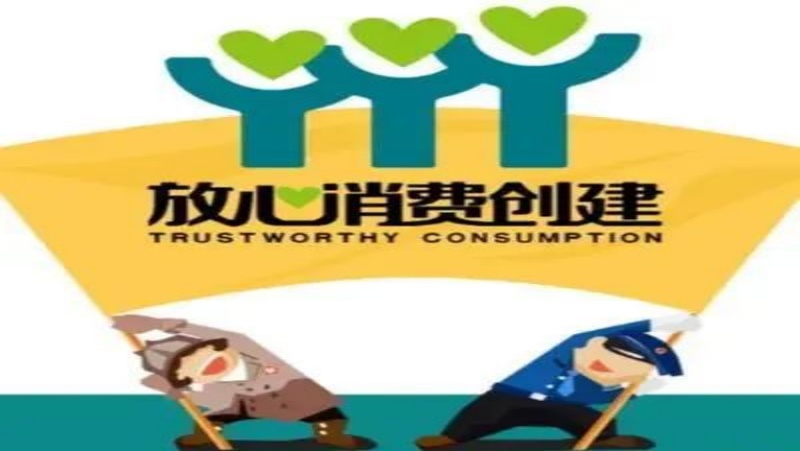
It is reported that the State Administration for Market Regulation will also release the "Trusted Consumption Commitment" logo to enhance the awareness of trustworthy consumption brands, open up online and offline channels, and facilitate consumers to query and identify trustworthy consumption commitment units and gathering areas. On the online level, the State Administration for Market Regulation will establish a unified information display platform to dynamically display the promised content of merchants, providing consumers with one click access, one click navigation, and one click evaluation. After a dispute occurs, consumers can directly contact the merchant for one click settlement. The State Administration for Market Regulation will promote the connection with high-frequency consumer application scenarios such as e-commerce platforms, navigation software, and third-party software, and light up online signs for trustworthy consumption commitment units and gathering areas, allowing consumers to easily access relevant information.
At the offline level, the operator who made the commitment displays the commitment logo and commitment items in a prominent position at the business premises, which can be seen by consumers when they go to the store for consumption. In addition, consumers can also apply to become observers of trustworthy consumption, participate in consumer experience experiments and other activities organized by administrative departments, industry associations, and consumer associations, conduct supervision and evaluation as social participants, act as the "eyes" and "promoters" of trustworthy consumption cultivation, and promote the synergy between social supervision and administrative supervision.
Building a multidimensional positive incentive system
The cultivation of trustworthy consumer entities is a fundamental task, which can steadily improve the business level of merchants and gradually solve problems such as low service quality, rapid dispute growth, and lack of consumer confidence from the source. At the same time, it is also a systematic project that requires the joint participation of operators, consumers, regulatory authorities, industry organizations, and other parties to integrate resources such as credit, finance, and third-party platforms. The work is difficult and complex.
Wang Huowang introduced that the cultivation of trustworthy consumer entities adheres to the core of self commitment by operators, does not adopt administrative orders to enforce, highlights positive incentive orientation, and enables trustworthy and committed operators to truly obtain market dividends, achieving a win-win situation where operators benefit, consumers can purchase with confidence, and the market becomes more dynamic.
To this end, a multidimensional positive incentive system is constructed for cultivation work, focusing on areas such as credit, finance, market, and publicity to create a combination of incentives: firstly, credit incentives, releasing the dividends of the trustworthy management system. Promote the inclusion of trustworthy consumption commitment units and aggregation areas in the joint incentive mechanism for trustworthiness, reduce the inspection ratio and frequency of trustworthy entities in accordance with regulations, and minimize interference with the normal production and operation activities of compliant enterprises.
The second is financial empowerment, strengthening financial service support. Guide financial institutions to provide support such as increasing credit limits, reducing interest rates, and waiving fees for trustworthy consumption commitment units and agglomeration areas on the basis of following market rules, effectively alleviating the financial pressure on businesses. Encourage the launch of special insurance products such as Consumer Assurance Liability Insurance and No Reason Return Liability Insurance to alleviate merchants' compensation concerns through risk sharing.
The third is market expansion, expanding the space for business development. Online launch of reliable consumption maps, high-quality service check-in points and other convenient carriers, allowing consumers to easily access promised merchant information by opening their mobile phones. Promote the inclusion of committed merchants in the scope of consumption vouchers, and support their participation in various exhibitions, shopping festivals, cultural and tourism festivals, and other activities.
The fourth is to promote and enhance brand influence. The State Administration for Market Regulation will use various media platforms to set up special topics and columns, vigorously promote and recommend trustworthy consumer brands and excellent benchmarks, and increase the exposure and market recognition of trustworthy merchants. At the same time, industry associations are encouraged to further explore businesses with good performance and high public evaluation.
Overall, although participating in the cultivation of trustworthy consumption may not receive cash, it can enjoy incentives such as credit empowerment, brand empowerment, and scenario services, establish a clear orientation of 'trustworthy benefits', and enable honest operators to obtain tangible benefits, thereby guiding more operators to actively participate in trustworthy consumption commitments and jointly create a safe and trustworthy consumption environment, "said Wang Huowang. (Outlook New Era)
Special statement: if the pictures and texts reproduced or quoted on this site infringe your legitimate rights and interests, please contact this site, and this site will correct and delete them in time. For copyright issues and website cooperation, please contact through outlook new era email:lwxsd@liaowanghn.com
 Recommended Reading Change it
























 Home


