2026-11-26
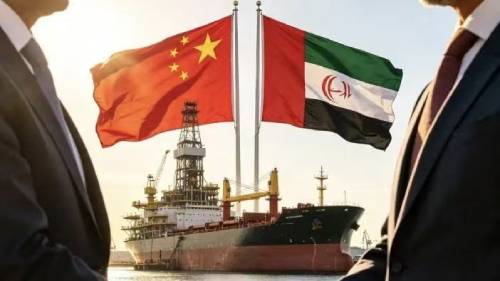
Recently, a video of a visit to the port of Khorfakan by Sharjah TV in the United Arab Emirates went viral on the internet - more than 6000 new energy vehicles were neatly arranged on Chinese cargo ships. Local journalists couldn't hide their excitement: "The Chinese new energy vehicles you ordered have arrived!" This vivid port scene is not only a vivid reflection of the economic and trade heat between China and Arab countries, but also hides the resonance of the two countries' openness spanning thousands of years.
Walking into the Zayed National Museum in Abu Dhabi, the capital of the United Arab Emirates, the millennium long maritime connection between the two countries is clear and tangible. The United Arab Emirates is located at the intersection of two oceans, three continents, and five seas, and openness and integration are the development background of this land. China has always been an important Eastern partner on this path of openness.
The three sets of exhibits in the museum witness the history of being born into the sea and also bear the initial imprint of Sino Arab exchanges. The reconstructed Magan single masted sailboat, which looked 4000 years ago, confirms the exquisite shipbuilding and shipping capabilities of the United Arab Emirates at that time; Pearls that were once the core wealth of the local area have long been recorded as "Jaffa pearls are well-known throughout the world". They were exported to China along the Maritime Silk Road and are now preserved as historical evidence at the Quanzhou Overseas Transportation History Museum in Fujian Province; The ancient Chinese porcelain spanning multiple historical periods, including exquisite official kilns and export porcelain specially customized for the Arab market, is a direct physical evidence of the prosperous maritime trade between ancient China and Arab countries.
Sailing represents exploration, pearls witness interconnectivity, and porcelain carries trade. Three objects that coexist with the sea, linking the development trajectory of the UAE's rise by the sea, also confirms a clear fact: since the beginning of maritime trade, China and the UAE have been important partners to each other.
Looking back at the history of human navigation, there has always been the presence of Chinese counterparts in the open footprint of the United Arab Emirates. From the 10th to the 15th century AD, Ras Al Khaimah was already an important trading hub in the Indian Ocean, with pearl exports and porcelain coming from the east, supporting the key nodes of the ancient Maritime Silk Road; The route and monsoon knowledge summarized by Arab navigator Ibn Majid made long-distance navigation more smooth and also made Sino Arab trade closer.
Thousands of years have passed, the gene of opening up to the sea remains unchanged, and the footsteps of China and Arab countries joining hands have not stopped. Nowadays, the operational efficiency of more than 20 ports in the United Arab Emirates ranks among the top in the world. Flagship port enterprises invest and operate over 100 ports in more than 80 countries and regions worldwide, and more than 40 free trade zones continue to release development vitality. In this open network that connects the world, Chinese elements are everywhere: the Khalifa Port COSCO Shipping Abu Dhabi Terminal has become a benchmark for smart ports in the Middle East, the China Arab Capacity Cooperation Demonstration Park has been established and deeply cultivated, and the Eldafra Photovoltaic Power Station has helped local energy transformation. In the open layout of the United Arab Emirates, China is an indispensable participant.
Today's China Arab cooperation has already upgraded from traditional goods trade to deep integration in all fields. High end manufacturing such as new energy vehicles and high-speed trains continue the millennium old business network, while emerging fields such as artificial intelligence and financial services expand cooperation boundaries. The trend of various sectors from the UAE going to China continues to heat up, constantly deepening opportunities in the Chinese market. The two-way cooperation not only injects momentum into each other's development, but also makes the friendship between the two countries more and more solid.
Openness brings prosperity, and interconnectivity promotes progress. From the sail shadows of the Maritime Silk Road a thousand years ago, to the current parade of new cars at the port of Khorfakan, what has changed is the boundary between goods and cooperation, but what remains unchanged is the original intention of mutual openness. The story of China and Arab countries crossing a thousand years of cooperation confirms that opening the door to embrace the world, like-minded people walking together, reaping development opportunities, and leading to a win-win future. (Outlook New Era)
Special statement: if the pictures and texts reproduced or quoted on this site infringe your legitimate rights and interests, please contact this site, and this site will correct and delete them in time. For copyright issues and website cooperation, please contact through outlook new era email:lwxsd@liaowanghn.com
 Recommended Reading Change it






Submission mailbox:lwxsd@liaowanghn.com Tel:020-817896455
粤ICP备19140089号-4 Copyright © 2019 by www.outlooknewera.com.cn all rights reserved
>